How to Make Homemade Poultry Seasoning Recipe (Thanksgiving Herb Blend)
Some links in this post may be affiliate links. That means I might make a small commission on qualifying purchases if you click the link. There is no extra cost to you.
This homemade poultry seasoning is a salt-free blend of sage, thyme, rosemary, marjoram, parsley, garlic, onion, black pepper, and a little nutmeg. It has the warm, savory flavor most people associate with Thanksgiving, but it is useful far beyond the holiday table.
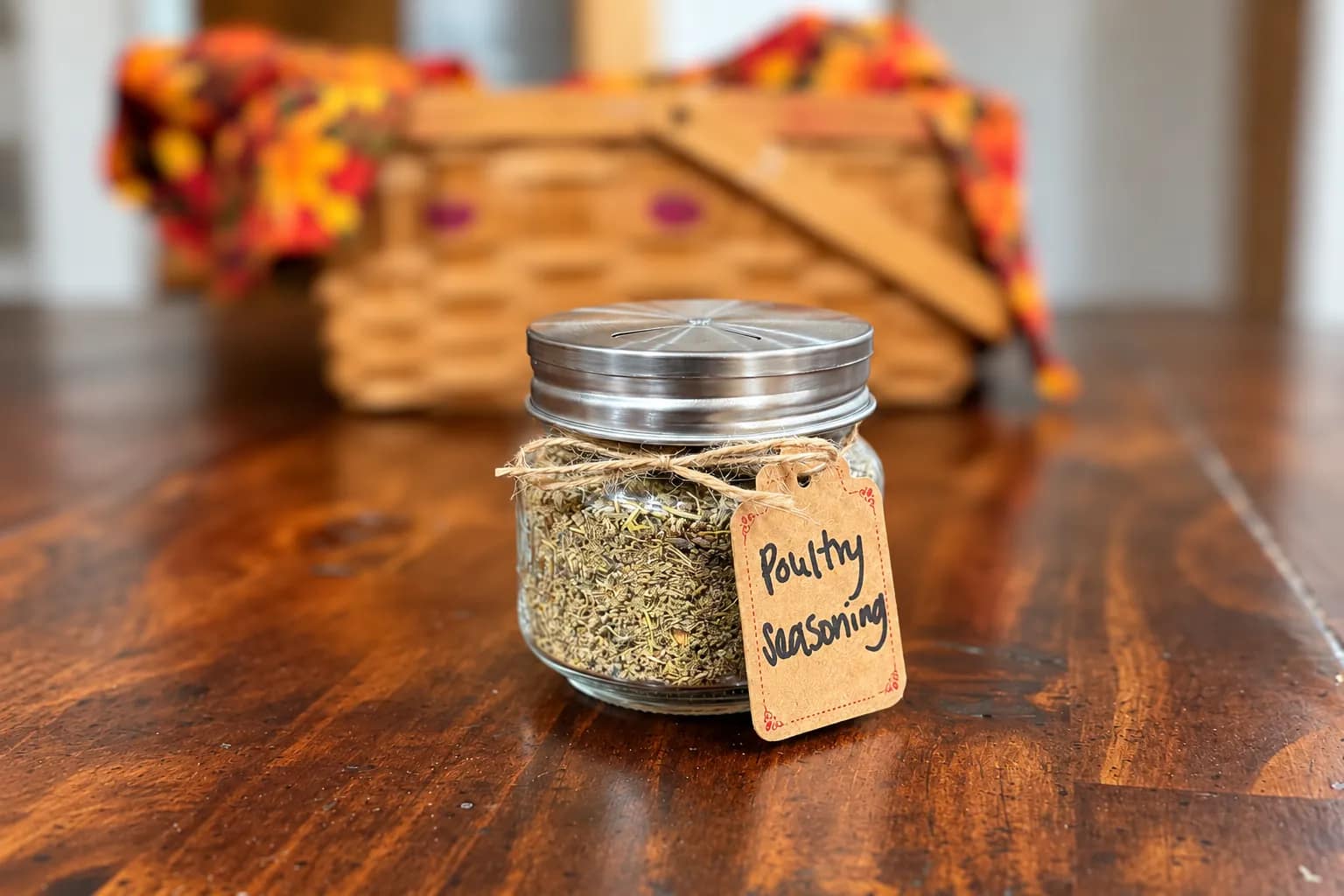
I originally made a large batch as one of the handmade gifts for an autumn homemakers market party. The jars looked simple and pretty tucked into the fall baskets, but the seasoning turned out to be much more than a decorative gift. I have used it on a whole roasted chicken, in meatloaf, and in a sweet and savory pork-chop marinade. Every version was delicious.
Because the blend contains no salt, I can season each dish separately instead of being locked into one salt level. That makes it especially useful for everything from poultry and stuffing to vegetables, soups, gravy, pork, and homemade food gifts. If you’ve ever enjoyed any of my made-from-scratch recipes, I think you’ll love this seasoning blend.
Table of contents
- What Is Poultry Seasoning?
- Why You’ll Love This Homemade Poultry Seasoning
- Ingredients in Homemade Poultry Seasoning
- How to Make Poultry Seasoning from Scratch
- How to Use Homemade Poultry Seasoning
- Pork Chop Marinade with Poultry Seasoning
- A Small Pantry Batch or a Large Gift Batch
- How to Store Homemade Poultry Seasoning
- Giving Poultry Seasoning as a Homemade Gift
- Frequently Asked Questions
- Printable Recipe Card
- Ingredients
- Instructions
- Notes
What Is Poultry Seasoning?
Poultry seasoning is a savory dried-herb blend usually led by sage and thyme. Despite the name, it does not contain poultry. It is simply a mixture of herbs traditionally used to season chicken, turkey, stuffing, dressing, soups, and other comforting dishes.
This version includes rosemary, marjoram, parsley, garlic, onion, black pepper, and nutmeg along with the sage and thyme. The result is earthy, fragrant, and warmly savory without being spicy.
Why You’ll Love This Homemade Poultry Seasoning
- It is salt-free. Add as much or as little salt as each recipe needs.
- It is genuinely versatile. I have personally used it on roasted chicken, pork chops, and meatloaf.
- It is made from ordinary dried herbs. There is no specialty ingredient to hunt down.
- It works for everyday cooking and Thanksgiving recipes. Use it in stuffing, gravy, soups, vegetables, turkey, and chicken.
- It makes an easy homemade gift. A jar, simple tag, and ribbon are all you need.
- The recipe scales well. Make approximately one cup for your pantry or prepare the tested sixteen-jar market batch for gifting.
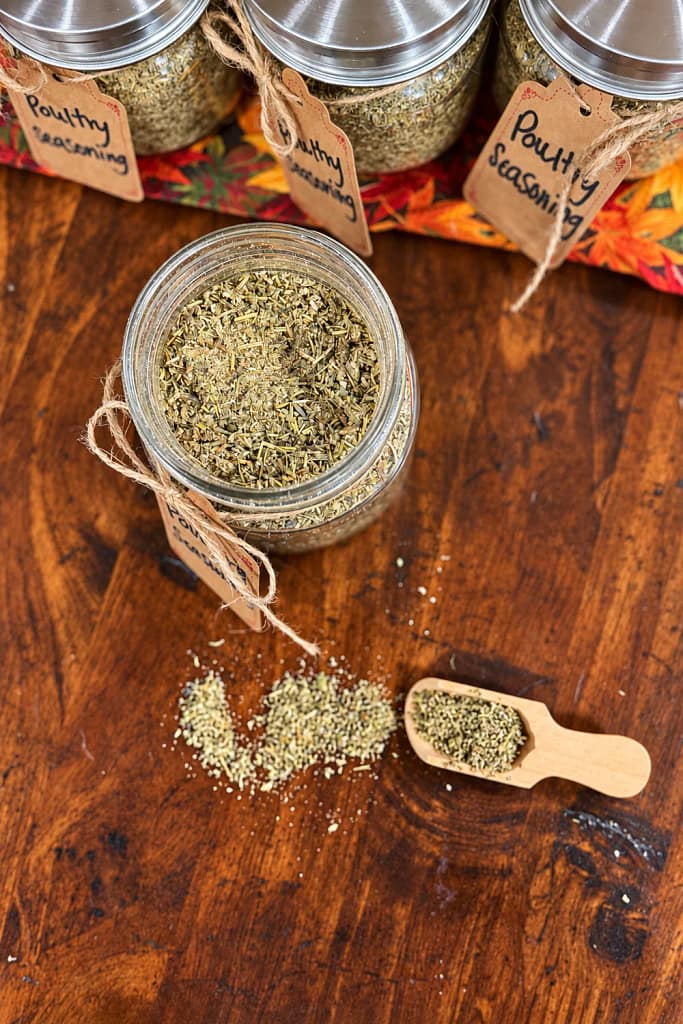
Ingredients in Homemade Poultry Seasoning
Rubbed sage
Sage provides the familiar earthy flavor most closely associated with poultry seasoning and Thanksgiving dressing.
Dried thyme
Thyme adds a woodsy, slightly minty flavor and balances the strength of the sage.
Dried rosemary
Rosemary is fragrant and bold. Lightly crushing it keeps long, sharp pieces from dominating the blend.
Dried marjoram
Marjoram is mild, floral, and slightly sweet. It softens the stronger herbs without making the mixture taste sugary.
Dried parsley
Parsley adds color and a mild herbal base.
Garlic and onion powders
These give the blend a rounded savory flavor and make it useful in meatloaf, marinades, vegetables, and soups—not only poultry.
Ground black pepper
Black pepper adds gentle warmth without turning the blend into a spicy seasoning.
Ground nutmeg
Only a small amount is needed. Nutmeg gives the mixture a warm background note that works especially well in stuffing, gravy, and fall dishes.
How to Make Poultry Seasoning from Scratch
- Lightly crush the dried rosemary until its pieces are closer in size to the other herbs. Do not grind the entire mixture into a powder.
- Measure all the herbs and spices into a dry mixing bowl.
- Whisk thoroughly, reaching down to the bottom of the bowl and breaking apart any clumps of garlic or onion powder.
- Transfer the seasoning into a clean, completely dry jar with a tight-fitting lid.
- Label the jar salt-free so no one assumes the mixture already contains salt.
For a large gift batch, compare spoonfuls taken from the top, middle, and bottom of the bowl. The herbs and powdered ingredients should look evenly distributed before you fill the jars.
How to Use Homemade Poultry Seasoning
Whole roasted chicken
Salt the chicken separately. Sprinkle enough poultry seasoning to cover the skin, then add a little inside the cavity. Roast the chicken according to your usual method. Cook the chicken until it reaches a safe internal temperature of 165°F, measured with a food thermometer.
Meatloaf
For a 2½-pound meatloaf, I use approximately 2 to 3 tablespoons of the dry blend and add salt separately. The sage and thyme make the meatloaf deeply savory without making it taste like Thanksgiving stuffing.
Turkey
Start with approximately 3 tablespoons for a 12- to 14-pound turkey. Mix the seasoning with softened butter or oil, rub it over the turkey, and salt separately to taste.
Stuffing or dressing
Start with 1 to 2 teaspoons for every 4 cups of bread cubes. Add more gradually after tasting because sage and rosemary become stronger as the dish cooks.
Roasted vegetables
Use 1 to 2 teaspoons per pound of vegetables along with oil and salt. It works especially well with potatoes, sweet potatoes, carrots, squash, and onions.
Soups and gravy
Add approximately ¼ teaspoon at a time. Stir, taste, and continue gradually so the sage does not overpower the other flavors.
Pork Chop Marinade with Poultry Seasoning
I added approximately 2 tablespoons of this poultry seasoning to a sweet and savory marinade. It was an easy way to use the blend outside of the usual chicken-and-turkey recipes. Always marinate pork in the refrigerator. Discard marinade that has touched raw pork, or boil it thoroughly before using it as a sauce, following the USDA’s pork-marinating guidance.
For the marinade, combine:
- ¼ cup olive oil
- 2 tablespoons soy sauce
- 2 tablespoons honey
- 2 tablespoons Dijon mustard
- 1 tablespoon brown sugar
- 1 tablespoon lemon juice
- 1 teaspoon Worcestershire sauce
- 2 cloves garlic, minced
- 1 tablespoon chopped parsley
- ½ teaspoon garlic powder
- ½ teaspoon salt
- Ground black pepper to taste
- Approximately 2 tablespoons homemade poultry seasoning
Whisk everything together and use it to marinate pork chops in the refrigerator. Discard marinade that has been in contact with raw pork rather than serving it as a sauce.
A Small Pantry Batch or a Large Gift Batch
The recipe card below makes approximately one cup, which is a practical amount for home use.
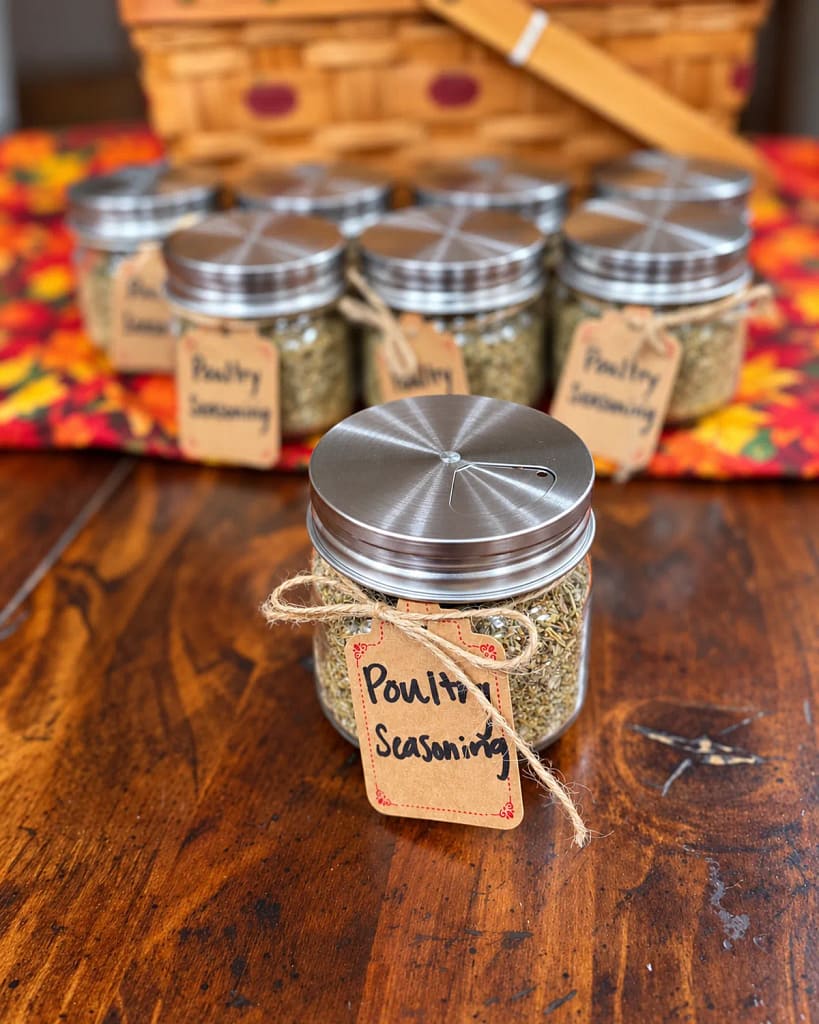
For my autumn homemakers market, I made the full large batch. It produced sixteen one-cup jars with just enough extra for tasting and photographs. If you are planning Christmas gifts, hostess gifts, a church gathering, or a homemade market exchange, the bulk measurements are included in the recipe notes.
How to Store Homemade Poultry Seasoning
Store the seasoning in a tightly closed jar in a cool, dark, dry pantry. Keep moisture and wet utensils out of the jar.
My own jar was still perfectly fine after one month in the pantry. For the best flavor, plan to use the blend within approximately six months. Dried herbs may remain usable longer, but their aroma and flavor gradually fade.
Giving Poultry Seasoning as a Homemade Gift
I filled half-pint mason jars, added shaker-style lids, and tied handwritten kraft tags around the jars with twine. The simple presentation fit the autumn farmers market theme without requiring elaborate packaging.
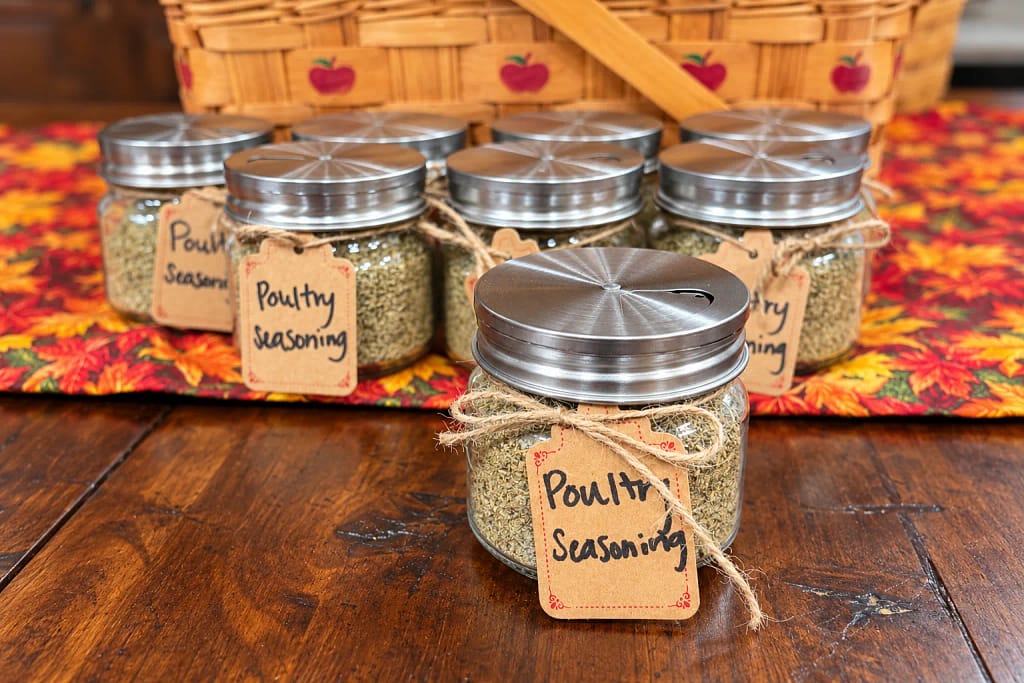
The party included a wonderful assortment of handmade gifts: homemade jam, natural deodorant, tallow balm, custom T-shirts, travel mugs, fresh milled flour cookies, and other useful homemade items. If I hosted it again, I would also add a DIY bath-salt bar so guests could make something while we visited.
Until the full farmers market party guide is published, save this seasoning as an easy starting point for your own handmade fall gift bundle.
Frequently Asked Questions
Does poultry seasoning contain poultry?
No. Poultry seasoning is a blend of dried herbs and spices commonly used with chicken, turkey, stuffing, and other savory foods. It contains no meat.
Does this poultry seasoning contain salt?
No. This recipe is intentionally salt-free so you can salt each dish separately.
Is poultry seasoning only for chicken and turkey?
No. I have personally used this blend in meatloaf and a pork-chop marinade as well as on a whole roasted chicken. It also works in stuffing, vegetables, soup, and gravy.
Should poultry seasoning be ground into a powder?
It does not have to be. Lightly crush the rosemary so the pieces are not overly large, then leave the rest of the blend slightly flaky. If you prefer a fine seasoning, pulse it briefly in a spice grinder without turning it completely dusty.
How long does homemade poultry seasoning last?
For the strongest flavor, store it tightly covered in a cool, dark, dry place and use it within approximately six months. My tested jar remained good after one month in the pantry.
Can I make this poultry seasoning as a gift?
Yes. Fill a completely dry jar, label it as salt-free, and include a card explaining how to use it for chicken, turkey, stuffing, vegetables, soups, and gravy.
Printable Recipe Card
Homemade Poultry Seasoning
Equipment
- 1 mason jar
Ingredients
- ¼ cup rubbed sage
- ¼ cup dried thyme leaves
- 2 tablespoons dried rosemary lightly crushed
- 2 tablespoons dried marjoram
- 2 tablespoons dried parsley
- 1 tablespoon garlic powder
- 2¼ teaspoons onion powder
- 1¾ teaspoons ground black pepper
- ⅜ teaspoon ground nutmeg
Instructions
- Lightly crush the rosemary until its pieces are closer in size to the other dried herbs. Do not grind the entire blend into powder.
- Add the sage, thyme, rosemary, marjoram, parsley, garlic powder, onion powder, black pepper, and nutmeg to a completely dry bowl.
- Whisk thoroughly for 1 to 2 minutes, scraping from the bottom and breaking apart any clumps.
- Transfer to a clean, dry jar with a tight-fitting lid. Label the jar salt-free.
- Store away from heat, moisture, and direct light. Use within approximately six months for the best flavor.
Notes
Nutrition
Ingredients
- ¼ cup rubbed sage
- ¼ cup dried thyme leaves
- 2 tablespoons dried rosemary, lightly crushed
- 2 tablespoons dried marjoram
- 2 tablespoons dried parsley
- 1 tablespoon garlic powder
- 2¼ teaspoons onion powder
- 1¾ teaspoons ground black pepper
- ⅜ teaspoon ground nutmeg
Instructions
- Lightly crush the rosemary until its pieces are closer in size to the other dried herbs. Do not grind the entire blend into powder.
- Add the sage, thyme, rosemary, marjoram, parsley, garlic powder, onion powder, black pepper, and nutmeg to a completely dry bowl.
- Whisk thoroughly for 1 to 2 minutes, scraping from the bottom and breaking apart any clumps.
- Transfer to a clean, dry jar with a tight-fitting lid. Label the jar salt-free.
- Store away from heat, moisture, and direct light. Use within approximately six months for the best flavor.
Notes
Salt: The blend intentionally contains no salt. Salt each finished dish separately.
Tested sixteen-jar gift batch:
- 4 cups rubbed sage
- 4 cups dried thyme leaves
- 2 cups dried rosemary, lightly crushed
- 2 cups dried marjoram
- 2 cups dried parsley
- 1 cup garlic powder
- ¾ cup onion powder
- ⅝ cup ground black pepper, or 10 tablespoons
- ⅛ cup ground nutmeg, or 2 tablespoons

Kim is a homeschooling mama of 5 who has been teaching her children at home since the very beginning — from preschool through high school. Over the past decade, she and her family have built a homestead from the ground up, starting with meat and egg chickens, growing into a large garden, and learning to preserve their harvest.
She taught herself to sew 13 years ago through books and early YouTube tutorials, and has been making modest, affordable clothing for her girls ever since.
Cooking from scratch became a necessity and a passion as her family learned to eat more nutritionally and live more frugally. She tests all of her sourdough and fresh milled flour recipes on the kids to ensure they’re delicious and nutritious.
At Plain Living, Kim shares what she’s actually lived — not theory, but the real skills she’s picked up through years of trial, error, and love for her family and home.



I cannot wait to try this. I’m thinking to add to my brined turkey, use for gifting during the holidays and as a butter for flavoring anything I cook or to spread on crackers. This recipe deserves that run on sentence. Thank you for sharing.