Is Sourdough Bread Actually Healthier?
Some links in this post may be affiliate links. That means I might make a small commission on qualifying purchases if you click the link. There is no extra cost to you.
The sourdough craze has taken the internet by storm over the past five years. If you’re scrolling through any social media platform, you’re sure to see someone baking an artisan loaf of sourdough. But the real question is: is sourdough healthier than yeast bread?

Today, let’s take a look at all things sourdough. We’ll look at the physical components of a sourdough starter, the fermentation process, and scientific outcomes of baking with sourdough. I think you might be surprised by some of the information.
Table of Contents
- What Is Sourdough? (And Why It’s Different From “Yeast Bread”)
- Meet the Microbes: Yeasts and Lactic Acid Bacteria (LAB)
- What Fermentation Changes in the Dough (and Why That Matters for Health)
- Phytates, Mineral Bioavailability, and Antinutrients
- FODMAPs, Fructans, and Sensitive Stomachs
- Glycemic Response: Does Sourdough Lower Blood Sugar?
- Flour Matters: Whole Grain, Ancient Grains, and Blends
- Fresh-Milled Flour: The Case for Grinding Right Before You Bake
- What the Human Studies Say (And What They Don’t…Yet)
- Practical Tips for Health-Forward Sourdough at Home
- FAQs
- Bottom Line
- References
What Is Sourdough? (And Why It’s Different From “Yeast Bread”)
Sourdough refers to a method of raising baked goods. The leavening agents we’re accustomed to include instant bread yeast, baking soda, and baking powder. But sourdough is different — it’s a collection of natural bacteria and yeasts that work together to raise the bread.
There are more than 80 strains of bacteria and yeast that can make up a sourdough starter. These microbes live in a mixture of flour and water, also known as the starter. In sharp contrast, commercial yeast is a single strain placed into a sort of hibernation for shelf stability.

Sourdough starter can be continuously fed to create more starter for baked goods. Commercial yeast is typically a one-time-use product. Even if you tried to “feed” it and create a yeast starter, it wouldn’t behave like sourdough.
Commercial yeast is prolific because it’s predictable, shelf-stable, requires no maintenance, and works rapidly. However, it doesn’t carry the same potential health benefits associated with sourdough — largely due to the fermentation process involved in sourdough.
A sourdough starter can be grown from scratch using only flour and water. This mixture can “catch” wild yeast and bacteria present in the flour and environment. A starter may also be “seeded” with a bit of starter from a friend or a dehydrated culture. Sourdough tends to take longer than instant yeast to raise breads, but that slow fermentation is what creates much of the magic.
Fermentation is the process of yeast and bacteria feeding on the carbohydrates in the dough. The carbs are broken down — “pre-digested,” in a sense. As the microbes process the flour, they release gases and organic acids, which get trapped in the dough and make it rise.
Meet the Microbes: Yeasts and Lactic Acid Bacteria (LAB)
Within a sourdough starter lives a complex ecosystem. It is a balance of the lactobacillus and natural yeasts. The flavor profile and balance of bacteria depends on factors like flour, water quality, and locale. San Francisco is so famous for its sourdough because the environment infuses certain strains of yeasts and bacteria into the starters grown there.
The Environment In a Jar of Sourdough Starter
Inside the starter, the wild yeasts consume sugars within the dough and output carbon dioxide. The carbon dioxide creates air bubbles within the dough, which gives it lift as the bubbles try to escape. These wild yeasts are vastly different from the single strain of commercial yeast. Sourdough yeasts work slowly, allowing the flavor and gluten to develop, which creates a delicious, soft, and fluffy loaf.
The role of Lactic Acid
Meanwhile, the lactobacillus is eating away at the carbs and creating lactic acid. The lactic acid, along with acetic acid, give the sourdough bread its signature tang. These bacterias also help to digest gluten, which is why sourdough helps digestibility.
The balance of the bacteria with the yeast creates a shuttle environment for dangerous bacteria and microbes. In other words- the good yeast and bacteria are so healthy inside a sourdough that the bad strains can’t survive. This balance keeps the starter strong, healthy and alive.
Importance of Maintaining your Starter
When a starter isn’t properly maintained, its tends to get an overly acidic smell. instead of the pleasantly sour aroma of a good sourdough, it will start to give off an acetone smell. This stink is simply the result of an unbalanced starter- the bacteria has overrun the yeast and is producing too much acetic acid. But it’s easily fixed with a few balanced feedings and proper maintenance.
Everyone region will have different flavors to infuse into a sourdough starter. Even micro-environments can affect the flavor profile and strength of a sourdough starter. In other words, one kitchen may produce a totally different sourdough than another. Even different rooms in your home may change the flavor.
Your Starter will Change
I’ve seen a lot of products online claiming to be the most delicious sourdough starter, especially from famous regions like San Francisco or certain areas of Europe. But I read a scientific study that said after 5 feedings in a new environment, a sourdough starter will completely adapt to the new location. Not a single cell of the original starter will remain.
Now you know the players. Let’s take a look at how the game unfolds.
What Fermentation Changes in the Dough (and Why That Matters for Health)
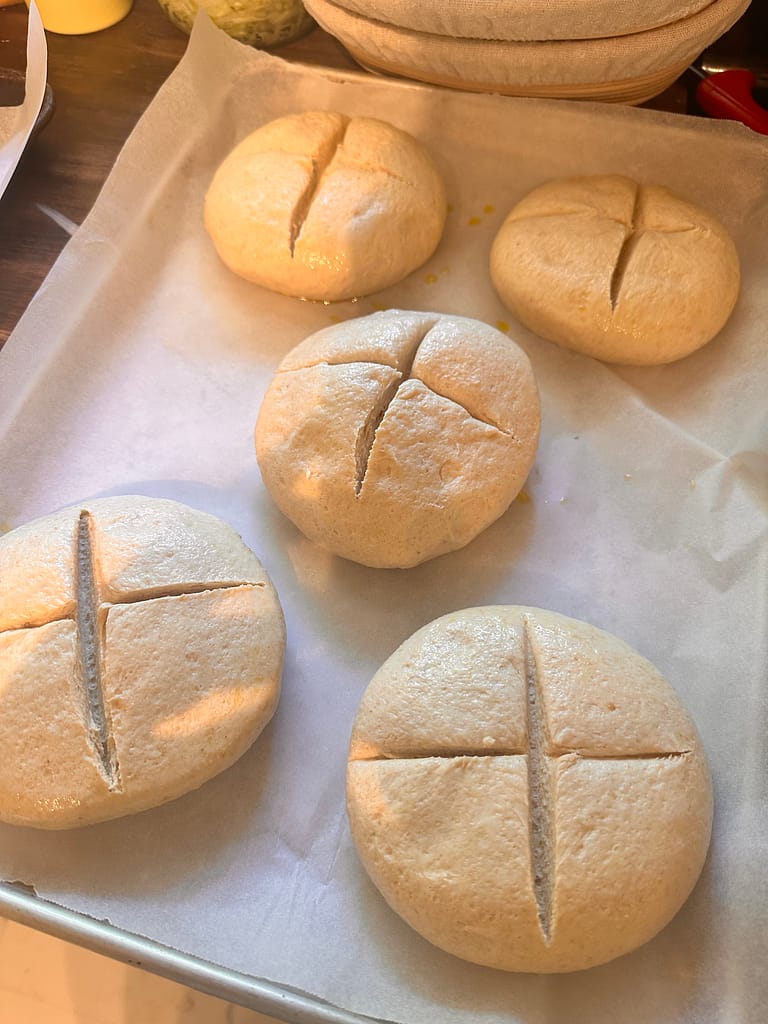
The name of the game is fermentation. Unlike commercial yeasts, fermentation does a lot more than just raise the dough. As the bacteria and yeasts starts to feed on the dough, actively digests some of the components of the flour. Time, temperature, hydration, and humidity can all affect this process.
These variables are what make sourdough such a unique process for each baker. I love that I don’t have to follow the rules- I just have to learn my process. And you can learn yours too with some trial and error!
There’s a lot going on during fermentation
During fermentation, a lot of process happen simultaneously. So, while the bacteria and yeasts are workmen on the flour, the microbes consume starches. The starts get broken down into smaller components: sugars, acids, and carbon dioxide. Once these components are separate, they can be used in different ways. The sugar will feed the yeast and bacteria, the carbon dioxide will raise the dough.
Meanwhile, the acids and enzymes get to work on the gluten. Gluten is necessary to make the dough strong. The gluten proteins stretch out into long stiff strands, which allow the carbon dioxide to raise the dough instead of bursting through the surface. Gluten can be tough and overly chewy. So the enzymes work to soften the gluten, making it fluffy and digestible.
Functions of the fermentation process
The acids also perform a preservative function during fermentation. lactic and acetic acidic change the pH of the dough, creating a deep nutty flavor and preserving the dough without any additional preservatives. The lower pH also makes nutrients and minerals more available to the body.
Phytase is another player in the fermentation game. It is an enzyme that breaks down phytates. Phytates block mineral absorption in the body. Research shows that removing phytates is a major health benefit because it allows minerals like iron, zinc, and magnesium to be absorbed during digestions.
“Sourdough fermentation can improve nutrient bioaccessibility or reduce the GI of bread.” [Systematic Review]
When you step back and see the big picture of fermentation, you’ll see that the entire process improves a dough in many ways. The chemistry of the dough changes over time, adding flavor and nutrition. Now that I’ve given you some more science, let me explain the role of phytase a bit more.
Phytates, Mineral Bioavailability, and Antinutrients
Phytates, (not to be confused with phytase) also called phytic acid, naturally occur in grains, nuts, and seeds. It’s a defense mechanism for the plant so that it can’t be digested alive. The phytates also store phosphorus within the plant- which is good for the plant bud bad for human digestion. The phosphorus binds to minerals during digestions and blocks the body from absorbing those needed nutrients.
The Hero Enzyme
Enter phytase- the hero of the fermentation process. The long fermentation process of sourdough activates the phytase enzyme. Phytase has an important job- to break down phytates. The longer the phytase hash to work, the more digestible adn available the minerals become. Since sourdough typically requires a long ferment, most or all of the phytic acid is broken down in teh bread.
As the phytates break down, minerals become more bioavailable- able to be absorbed by the digestive tract. When your body is able to freely absorb necessary nutrients, your immune system is strengthened. The minerals and the basic building blocks that create a foundation for health. Your body will be able to create more energy and continue to improve its digestion capabilities.
A long-known process
These fermenting processes have been well know throughout ancient times. Although ancient cultures did not understand the science behind it, they used fermentation to preserve their foods and boost health. They understand that ferments like sauerkraut, kefir, and sourdough kept their food safe for longer and made them healthier. Now, we have the science to back it.
They get a bad rap, but they’re okay
Phytates aren’t all bad though. They play a key role as antioxidants. This fact means that it is important to maintain a balance. The goal is to ferment enough of the phytates to release the minerals, but keep enough to act as antioxidants and clear toxins from your body. Sourdough breads naturally achieve this because of the chemistry within the dough!
That’s a lot of scientific speak with unfamiliar words. Fermentation is an easy this to achieve, but it is a complex process. But that science it what allows sourdough to affect the digestive system positively. Let’s consider how sourdough can help diseases and condition like IBS.
“Fermentation reduces phytate content and improves mineral bioavailability.” [MDPI 2024 Review]
FODMAPs, Fructans, and Sensitive Stomachs
If you’re here learning abbot sourdough in hopes that you can eat bread without the disastrous after effects, this section is for you. Perhaps you’ve experience intestinal upset when you eat bread and bread products. Most likely, it’s due to specific carbohydrates that are present in bread. Some of the most common carbs that people have a hard time digesting include lactose (people who can’t have dairy), galactans, and fructans.
These carbs can spend a lot of time in your gut, where they fermented produce gas. This gas builds in your intestines and causes bloating, gas, and stomach pain. This process is particularly rough for people with IBS or UC.
Fermentation Changes Things
The beauty of sourdough is that it allows the fermentation process to happen in the dough before it ever gets to your intestines. Those hard-to-digest carbs get broken down while the dough rises, meaning that they won’t be building up inside your gut. By the time you eat the bread, those gasses have been released adn cooked away.
Reducing Carbs
Research now shows that sourdough is able to reduce those difficult carbs by as much as 70% under the right conditions. These results can be achieved by altering the time, flour choices, and culture strains of the sourdough starter.
Let’s talk about fructans. These are a common carb found in wheat. They are one of the reasons that store-bought breads and other wheat products cause so much gastro-intestinal distress. The wild microbes in sourdough consume most of the fructans during fermentation. Rye and whole grains wheat’s are particularly high in fructans, which gives the sourdough more momentum in digesting them.
Keep in mind that, while sourdough is great at reducing these problems, it can not fully eliminate those hard to digest carbs. Sourdough will never make break FODMAP-free or gluten free. Everyone’s tolerance is different, and sourdough allows many people to enjoy breads. But it may not work for others with a lower tolerance.
“Fructan levels decreased by up to 73%… confirming substantial reduction of FODMAPs.” [Frontiers Microbiology 2024]
Another common issue when consuming bread is the glycemic index. Fermentation can impact teh glycemic index of bread made with sourdough starter. Let’s see if sourdough is good option for you to lower the GI of your bread.

Glycemic Response: Does Sourdough Lower Blood Sugar?
When you eat carbohydrates, your stomach sends signals to release insulin into the blood stream. The insulin transports the glucose from carbs through the blood stream. Then, the insulin deposits it wherever your body needs energy. When the insulin is carrying glucose, the glucose elevates blood sugar. Glycemic Index refers to the speed at which glucose elevates blood sugar levels.
Glycemic Index in Carbohydrates
Highly processed white yeast bread is a high GI food because it release all of its sugar at once and causes a rapid spike in blood sugar. Sourdough breads tend to have a much lower GI for various reasons.
Organic acids abound in sourdough bread during the fermentation process. These acids slow down starch absorption, making it more difficult for insulin to pick up and distribute the glucose throughout the body- this slowing of the process keeps the blood sugar form spiking all at once. The acids lower the pH of the bread, and togetherness gluten strands, making the carbs relate sugars in a delayed process. The slower a carb breaks down, the more steady the blood sugar level remain.
Glycemic Index with Sourdough
Studies now show that sourdough has a much lower and lower glycemic response that conventional yeast breads. You can easily impact the results by the type of flour used, the fermentation time, and the person eating. Fresh milled whole grain flours offer the most signification decrease in GI, as well as a longer fermentation time (12-24 hours). Sourdough also has better results for people who are less susceptible to blood sugar spikes.
When your blood sugar spikes it tends to plummet and crash too. That crash makes you sleepy after a meal. You loose all your energy in the afternoons, and can’t be energized by caffeine. Reducing the glycemic index of a meal and eliminate this crash. Pair your sourdough with a good protein source to further improve the glycemic index. Try butter, nut butter, cheese, or eggs with your sourdough bread.

The slower your body absorbs glucose, the more stable your blood sugar is. And a stable blood sugar means more energy, feeling full and satisfied longer after eating, and avoiding a post-meal crash.
Keep in mind that sourdough is not a magic pill that allows you to eat bread.If you struggle with blood glucose levels, you’ll want to carefully experiment with sourdough. With help form your doctor or a nutritionist, test adn document your blood sugar before, during, and after eating sroudough. Compere this with your results form regular meals. You may find that your metabolism functions better with sourdough.
But not all sourdough will have the same impact. There are many ays to improve the health benefits of your sourdough. Let me give you some ideas on how to make the healthiest version of sourdough bread.
“Crossover trial… found no significant difference in clinical effects” between sourdough and white bread. [Korem et al., 2017]
Flour Matters: Whole Grain, Ancient Grains, and Blends
The flour that you use your sroudough loaf will impact the flavor, texture, fermentation, and nutrition levels of your bread. Sourdough is a method, not a specific recipe. Each option will require slightly different amounts, process, and timing and will results in slightly different loaves. Whether a loaf is dense and nutty or light and fluffy, you can still call it sourdough if you fermented it properly.
How do whole grains impact the process?
Whole grains contains bran, germ, and endosperm. These three components make up the grain of wheat, rye, barley, etc. Each of these components offers something- fiber, vitamins, or minerals. Refined white flour removed teh bran and germ, which also removes most of the nutrition.
Whole grains, especially when freshly milled, maintain the full level of nutrition available from the grain. when fermented, these flours release all of their health benefits through bioavailable nutrients, fiber, and minerals that improve gut health.
What about Ancient Grains?
Ancient grains tend to have higher nutrition, but can be more difficult to work with due to lower gluten content. Big Ag has modified modern grains to contain high levels of gluten protein, which allows bread to be become light and fluffy. So ancient grains will be more nutritious and flavorful, but a bit less like conventional yeast bread.
Einkorn is a an ancient grain. Well known for its nutty flavor, high protein levels, and high level of nutrients, you can source it easily. It is one of the oldest cultivated grains because it is very easy to grow and reproduce. I have found that it is one of the most common grains people use when they want to avoid wheat.
Spelt is another historical grain that Europeans use for breads, pastas, and beers. Spelt adapts incredibly well in color climates and its high level of B vitamins. Before modern wheat became so prevalent, the majority of Americans used spelt for flour.
Emmer and Kamut are both ancient grains with prolific historical uses and cultivation. They tend to be less common and less cultivated in modern times. However, many people refer to Kamut as the ancestor of most modern day wheats.
Comparing nutrition of Grains, Making a Choice
Each of these grains has a different level of gluten, different gluten structures, and varying nutrient levels. Many people choose one over the others based on flavor profile. Especially when fermented, these grain all have deep, unique flavors. You will need to choose a grain based on your own needs and preferences.
Do realize though, each grain will have a different process to create. sourdough bread due to the gluten and nutrient differences. It is helpful to replace a portion of the flour with all purpose flour or fresh milled wheat flour to help the dough act more like a regular sroudough until you learn new methods.
Experiment with different ratios and combinations of grains for your flour. try half white and half rye. Or combine a hard red wheat with a soft white. Blending different grains will all you you to build layers of flavor and improve nutrition. Microbes in your starter will adapt to each type of grain as your experiment.
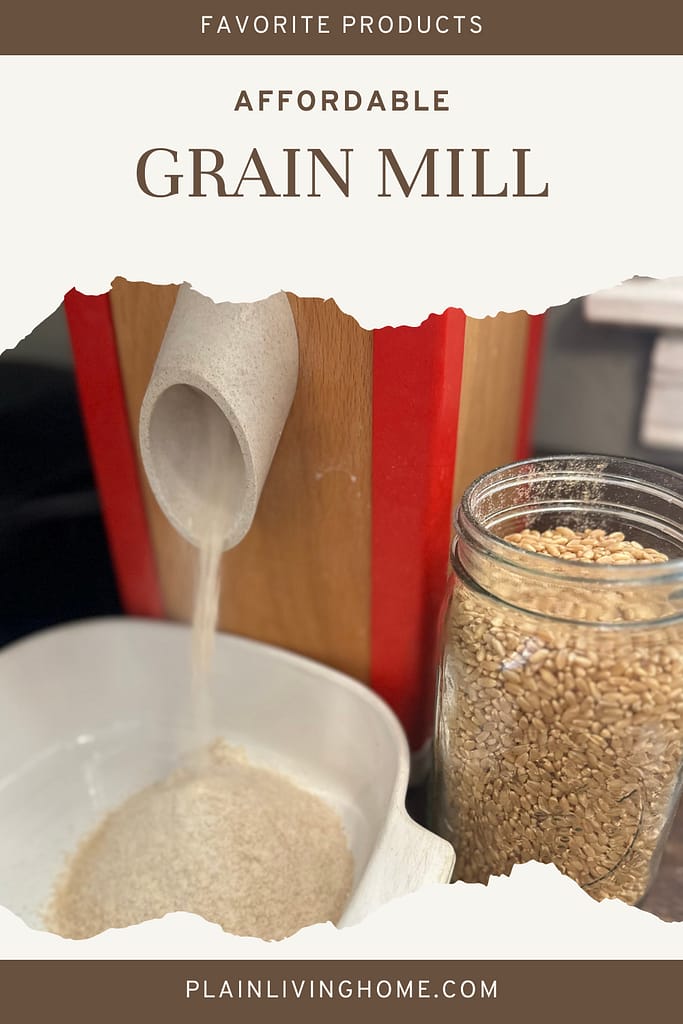
I highly recommend milling your own flour at home to get the best flavor and highest level of nutrition, no matter which grains you choose to use. I’ll go into a little more depth about fresh milled flours for you.
Fresh-Milled Flour: The Case for Grinding Right Before You Bake
Fresh milled flour simply refers to the process of grinding grains into flour. It is fresh if you use it within a few hours of grinding it. Commercial flours, even those that are whole wheat, tend to sit on the shelf for months. They’re no longer fresh. Within the first few hours of milling, most nutrients evaporate, so your months-old whole wheat flour isn’t actually more nutritious.
Why fresh milled, do I have to use it right away?
When you mill flour from whole grain, it maintains the size enzymes, healthy oils, and vitamins. However, all of those components begin to degrade almost immediately. Air exposure causes oxidation which leads to vitamin loss- especially vitamins e and b. Freshly milled flour maintains its nutrients, has a rich, nutty flavor, and infuses a beautiful golden colors into the loaves.
Since fresh milled flour maintains all of its nutrition, using it for sourdough is incredibly beneficial. The fermentation process can then unlock all of those nutrients. Sourdough bread made with fresh milled flour is the ultimate nutritional resource.
“Heat, light, and moisture degrade the nutrient content of whole-grain flours.” [Tufts Food Lab]
Ok…you’re an expert now. Let’s talk health benefits.
What the Human Studies Say (And What They Don’t…Yet)
It’s easy to jump on the bandwagon, especially with the sourdough craze during COVID times. People got excited about sourdough because of the health claims, and the possibility of keeping a little pet on the counter. A sourdough starter is like a real life tomagatchi! But the truth is, the health benefits are not guaranteed. And some of them aren’t even proven.
Some of the claims are true. There is scientific evidence that sourdough can improve nutrient absorption, lower the glycemic response, and enhance digestibility compared to commercial yeast breads. We’ve already learned that some of these things are true. Fermentation reduces phytates, which allows for better mineral uptake.




Some trials have shown that Sourdough can lower post-meal blood sugar levels. Many people have reported better tolerance with their IBS or digestive issues.
Many Variables of Sourdough
results can differ so broadly because there are so many variables when it comes to sourdough bread. The science is impacted by flour type, fermentation time, the strength of the started, and even the metabolism of the person eating the bread. Some studies have found no significant different in yeast bread versus sourdough. You’ll have to evaluate for yourself.
Sourdough has natural microbes that could possibly affect gut health my introducing beneficial acids and enzymes. This idea has been proven in labs, but not with real human studies. keep in mind, sourdough should be one addition to an overall balanced and healthy diet. sourdough is good for you, but it’s not a magic pill. So, now that you know all of this, how can you make sourdough in your own kitchen that you know is good for you?
“Knowledge gaps still limit definitive conclusions on clinically relevant benefits.” [Frontiers Nutrition 2023]
Practical Tips for Health-Forward Sourdough at Home
Let me make one thing very clear: sourdough is kind. sourdough is flexible. sourdough is forgiving. sourdough is simple. The beauty of sourdough is that most recipes are edible even when they don’t turn out perfect. The key is to practice and experiment so you can find your own system that works. Dont’ get bogged down with rules. It’s not that scientific. There are some basic principles that you can apply.
Basic Guidelines for a Sourdough Beginner
I’ll give you some general guidelines, and if you want to read other peoples’ hard, fast rules, go right ahead. The key to good sourdough is your starter. It needs to be healthy, strong, and have a good balance of bacteria. And remember how the acetic acid makes it too acetone-y? You can avoid that by keeping a good starter.
There are many methods to keeping a starter healthy and active. You can experiment to see what works best for your environment and schedule. I keep mine on the counter, feed it whenever I think about it, and eyeball the measurements.
Most people recommend feeding your starter with a 1:1:1 ratio. That means if you have half a cup of starter, you’ll feed it half a cup of flour and half a cup of water.
Ratios for Feeding Your Starter
BUT WAIT! other people will tell you that you MUST weight the ingredients, not measure them in cups. Others might say a 1:2:2 ratio is needed. I think you should just try different things. Just pay attention to how your starter behaves and you’ll figure out what works. Some people make their starter the consistency of pancake batter. I like to make mine extra thick and stir it a little extra to develop some gluten…it will rise better than ever!
Here are some basics that you can keep in mind. Always feed the starter more than its own volume. Look for it to double in size before you use it. But that’s not a strict rule- if it gets nice and bubbly and active within a few hours, use it! It will rise fast when warm and very slowly when cold. Stick it in the fridge if you can’t use or maintain it for a while.
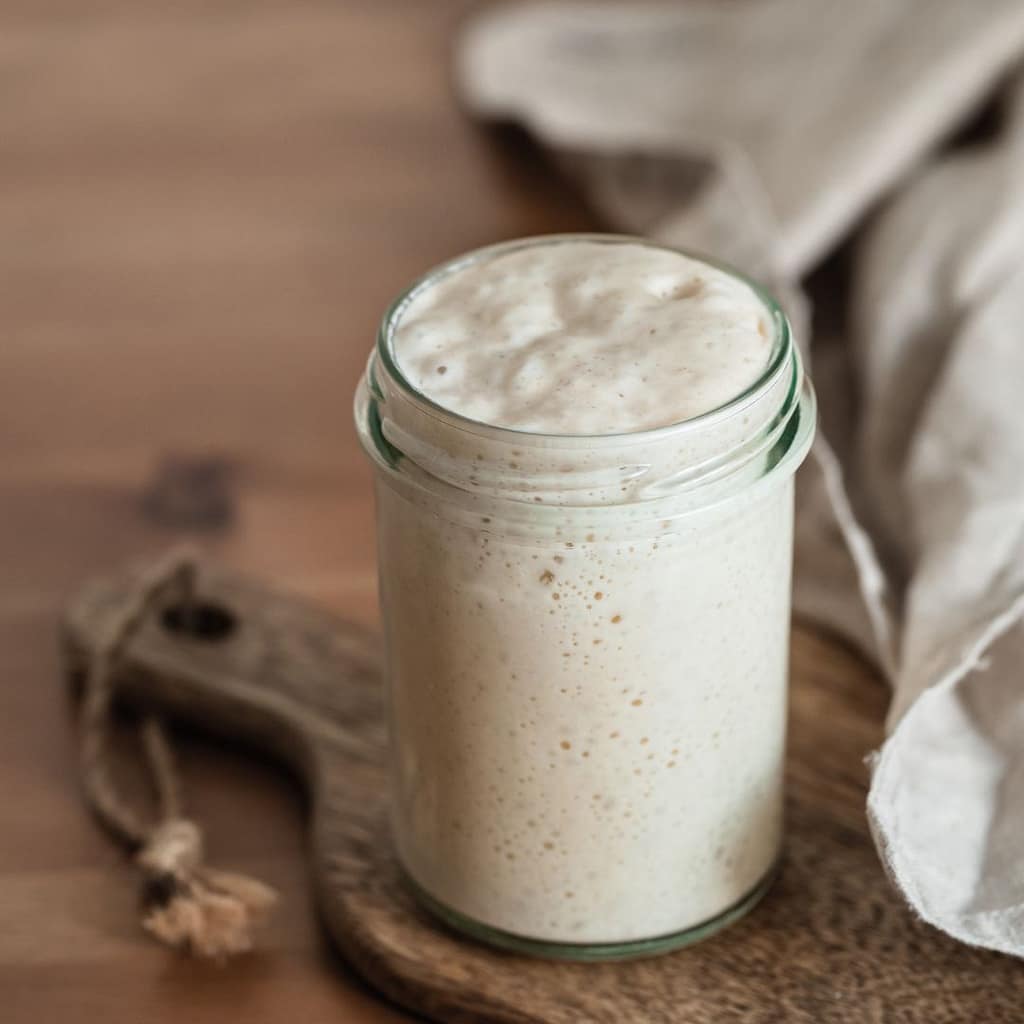
You can always feed it an excessive amount and use the extra for a discard recipe. This idea maintains the health benefits and lots of recipes work jsut fine with discard.
Sourdough Starter, Exactly
So what is discard? Basically, just sourdough starter that’s done fermenting. It’s past its prime of activity. Discard is flour and water that is done fermenting and has already been predigested by the sourdough. But it’s perfectly usable in a lot of recipes.
I tend to use unbleached all purpose flour to get my starter to rise very quickly. I use fresh milled whole wheat for a strong starter, but it takes it longer to be fully active. If you really want a strong and healthy starter, feed it rye flour.
Making the dough strong enough to rise
You need to develop gluten in the dough. You can do this with many methods. The stretch and fold allows time to develop the gluten. Some no-knead recipes just let it develop naturally. I like to use my stand mixer to knead it so that it’s just done and ready to ferment.
Fermentation and Shaping a sourdough Loaf
The first ferment has to raise the dough. Most doughs will be sticky or tacky. As the dough ferments and rises, it will become less sticky and very fluffy. I like to say that it should feel like a cloud, but my friend once told me “Well, I’ve never touched a cloud”. Basically you’re looking for the dough to be light and airy when you touch it. Take the time to shape it and get the dough tight.
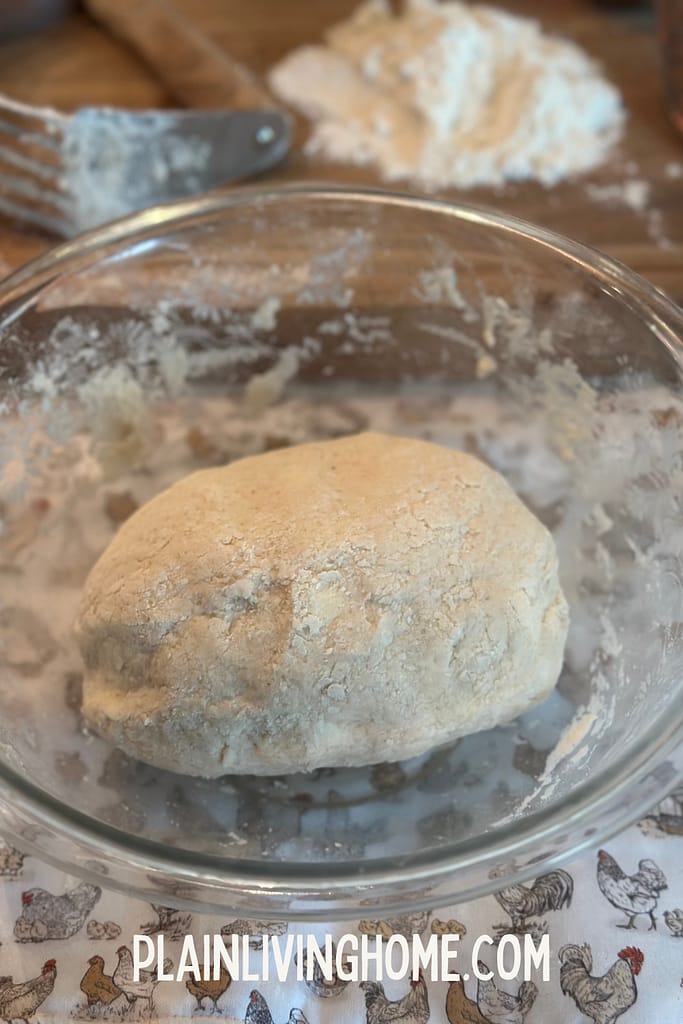
This is organizing the gluten into a structured shape to help trap more air inside the dough. Allow it to ferment more after shaping- leaving it in the fridge overnight will allow it to ferment with less sour flavor. But be careful not to over ferment because it will get slimy and stinky. Just practice. finally, let me tell you a secret.
Sourdough is not only for bread. it can be for any baked good. Let the sky be you limit. Let your imagination run wild. Try cheddar bay biscuits, chocolate cake, cookies, granola bars, and more. Now I’m certain you have questions. Before you panic, check out my FAQs to see if I’ve already answered.
FAQs
Is sourdough gluten-free?
The short answer is no. But dont’ let that stop you. The fermentation process can lower gluten levels and make gluten more digestible. If you have full blown celiac disease, sourdough may not be the magic solution. But if your issues are less serious, you may find that you tolerate sourdough breads much better.
Can sourdough help with IBS or digestive issues?
Results can vary here. IBS has such a wide range of symptoms and severity. But there is a lot of anecdotal evidence that shows people have better tolerance, even with IBS. Fresh milled flours and long fermentation can make your bread easier to digest and more nutritious, which can ease the symptoms of gastrointestinal problems. As always, consult your doctor regarding this.
Does sourdough have fewer carbs than regular bread?
Total carbs are similar, but fermentation changes how the body digests them. The glycemic index is much lower, meaning your blood sugar wont spike as high. A balanced blood sugar can help with healing, immune system function, weight loss and overall health. Dont’ be afraid of the carbs- they’re energy for your body.
Is store-bought sourdough the same as homemade?
Absolutely not. Every one that I have ever examined had loads of preservatives, extra ingredients, and even commercial yeast. My guess is that they make regular bread, add in a sourdough culture and call it sourdough. It is not fermented, and it is not the healthy and nutritious product that you would make at home yourself.
What’s the best flour for a healthy sourdough?
I would suggest using a mixture of fresh milled flours. Try a hard red wheat or rye as a beginner and branch out into other grains as you get better at the process.
Bottom Line When it Comes to Sourdough
For me, sourdough isn’t just a trendy pinterest opportunity. It is a tool Lin my kitchen to create declines, nutritious, healing meals for my family. Sourdough is a return to slow living, slow eating, and intentionality. Don’t forget- sourdough is kind! it’s flexible. it’s forgiving. it is simple.
Remember that not everything on the internet is true. There are some wild claims on the web. But a lot of the health benefits of sourdough are scientifically proven. There are genuinely health benefits of sourdough breads. You can make your bread more digestible, more flavorful, and full of nutrition.
If you’re not sure where to start, browse my other sourdough posts and recipe. You may find one that sounds wonderful and simple. Once you try a basic recipe, your confidence will grow. I hope you’ll give sourdough a try, because it brings me a lot of joy in my home. Comment down below what you learned, what you want to try, and if sourdough is meant for you!
Sourdough Gift Basket
I put together a tutorial to create a handmade gift basket full of goodies for your favorite baker. Make items off this list to put together for anyone who is interested in sourdough. Find the post and tutorials here:

- How to make a Sourdough gift basket
- Sew a Sourdough Proofing Cover
- Sew a Sourdough Starter Cover
- Sew a sew of hot pads for baking bread
- Sew a waist apron
References
- Ribet L. et al. (2022). Nutritional benefits of sourdoughs: A systematic review.
- D’Amico V. et al. (2023). Does sourdough bread provide clinically relevant health benefits?
- Alkay Z. et al. (2024). Exploring the Nutritional Impact of Sourdough Fermentation.
- Koç F. et al. (2024). Impact of low-FODMAP sourdough bread; fructans reduced up to 73%.
- Tufts Food Lab. Milling and Storage (fresh-milled flour, oxidation & nutrient loss).
- Korem T. et al. (2017). Crossover trial: person-specific glycemic effects of bread.