How to Make Amazing Cinnamon Rolls with Fresh Milled Flour
Some links in this post may be affiliate links. That means I might make a small commission on qualifying purchases if you click the link. There is no extra cost to you.
These fresh milled flour cinnamon rolls are soft, fluffy, and filled with buttery cinnamon sugar. The dough can be made with freshly milled hard red wheat, soft white wheat, spelt, or a beginner-friendly mixture of fresh milled flour and all-purpose flour.
Freshly milled whole grain gives the rolls a warm, slightly nutty flavor without making them gritty or heavy. After a generous layer of buttercream melts into the warm spirals, even my kids are too busy eating them to notice that I used whole grain flour.
If you are new to yeast dough or milling wheat at home, cinnamon rolls are a delicious way to practice. The dough requires patience while it kneads and rises, but most of that time is hands-off.
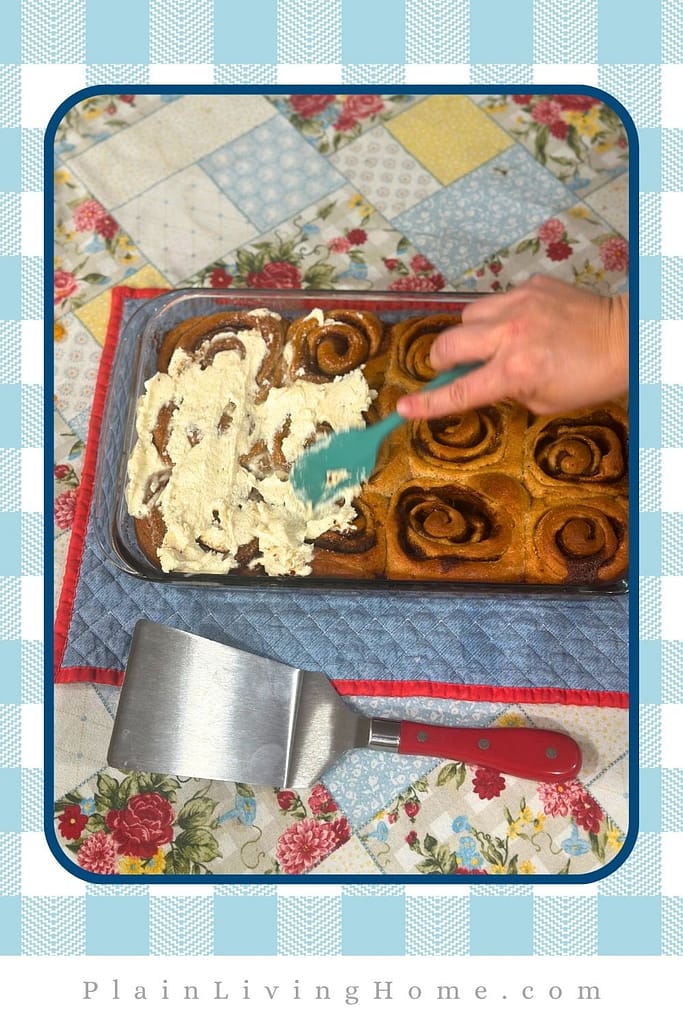
Why You’ll Love These Fresh Milled Flour Cinnamon Rolls
- Soft and fluffy: A short rest gives the freshly milled flour time to absorb the liquid, and thorough kneading develops a strong, stretchy dough.
- Rich whole-grain flavor: Freshly milled wheat or spelt adds more flavor than ordinary white flour without producing a gritty roll.
- Several tested flour options: Use hard red wheat, spelt, soft white wheat with sunflower lecithin, or a half-and-half beginner mixture.
- Family approved: My kids devour these rolls and do not complain that they are made with whole grain flour.
- Worth the wait: The recipe takes about three hours, but most of that time is spent letting the dough rise while you do other things around the kitchen.
If you are still learning how fresh milled flour behaves, read my Baking Basics for Beginners before you begin.
The Best Grain for Fresh Milled Flour Cinnamon Rolls
I have personally made this recipe successfully with several grains, but they do not all behave exactly the same way.
Hard Red Wheat
Hard red wheat produces a strong dough with a hearty whole-wheat flavor. It is a good option when you want to use 100 percent fresh milled wheat and still develop enough gluten for a yeast dough.
Spelt
Spelt makes tender cinnamon rolls with a naturally warm, slightly sweet flavor. Watch the dough as it kneads rather than relying only on the clock because spelt dough can become weaker if it is overmixed.
Soft White Wheat
Soft white wheat can make a tender roll, but it does not create the same dough strength as hard wheat. When I use it in this recipe, I add 1–2 tablespoons of sunflower lecithin to help strengthen the dough.
Half All-Purpose and Half Fresh Milled Flour
For beginners—or for family members who are still adjusting to whole grains—replace half of the fresh milled flour with all-purpose flour. This produces a lighter, more familiar texture while retaining some of the flavor of freshly milled grain.
I have not tested this exact recipe with hard white wheat, so I do not recommend presenting it as a tested option yet.
Ingredients and Why They Matter
Fresh Milled Flour
Mill the grain shortly before mixing the dough. You will need 4½ cups of flour. Because different grains, mills, measuring methods, and humidity levels affect flour volume, pay attention to the dough texture as well as the measurement.
Milk or Water
Either warm milk or warm water works in this recipe. Milk makes the dough a little richer, while water is a perfectly usable substitute. The liquid should feel warm rather than hot so it does not damage the yeast.
Yeast
You may use active dry or instant yeast. Bloom active dry yeast in the warm liquid for 10–15 minutes before adding the remaining dough ingredients. Instant yeast can be mixed in without blooming.
Butter
Softened butter is technically ideal for the dough, but I often melt it because I am in a hurry. If you melt it, let it cool enough that it is warm—not hot—before combining it with the yeast and eggs.
You will also need softened butter for the cinnamon-sugar filling and buttercream icing.
Honey, Eggs, and Salt
Honey sweetens the dough, eggs add richness, and ½ teaspoon of salt balances the flavor. Do not omit the dough salt; the pinch of salt listed in the icing serves a separate purpose.
Sunflower Lecithin
Sunflower lecithin is optional unless you are using soft white wheat. For soft white wheat dough, add 1–2 tablespoons to improve dough strength.
Brown Sugar and Cinnamon
Brown sugar, cinnamon, and softened butter create the thick filling inside every spiral. Spread it evenly across the dough so each of the 12 rolls has plenty of filling.
Equipment You’ll Need
- Grain mill
- Stand mixer with a dough hook, or a large bowl for kneading by hand
- Measuring cups and spoons
- Rolling pin
- Rubber spatula
- Sharp knife, unflavored dental floss, or bench scraper
- Buttered 9 × 13-inch baking dish
- Mixer or whisk for the buttercream
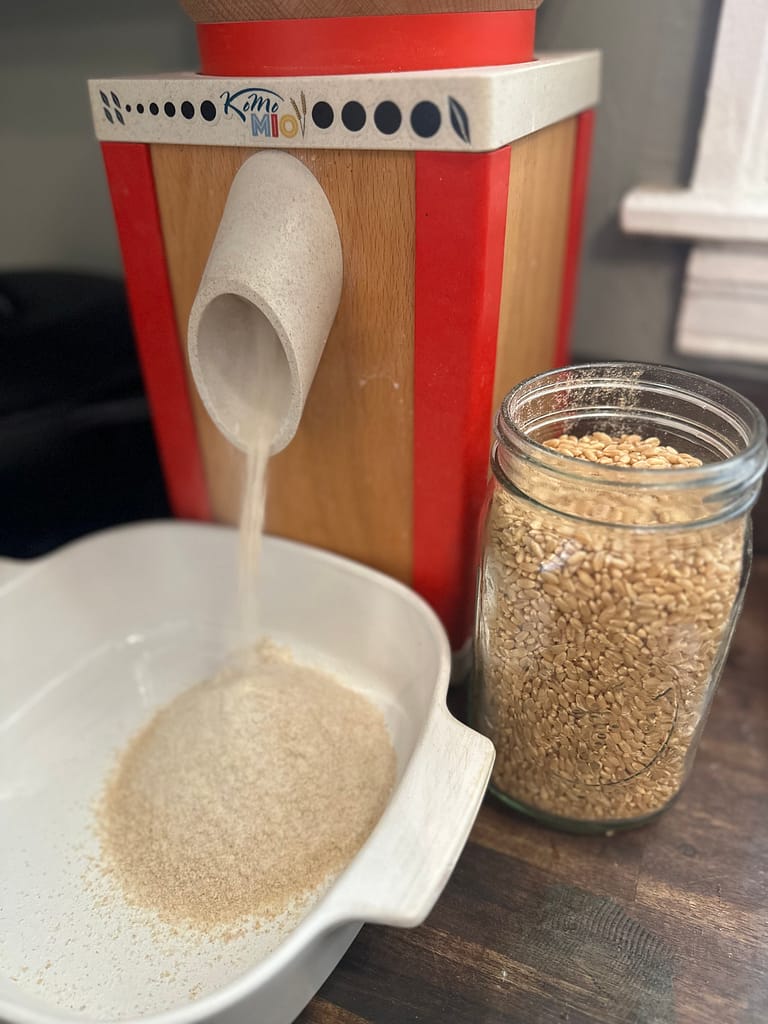
How to Make Cinnamon Rolls with Fresh Milled Flour
1. Mill the Grain
Mill enough grain to produce 4½ cups of fresh flour. The exact amount of wheat berries needed can vary, so measure the flour after milling rather than assuming every grain will produce the same volume.
2. Combine the Wet Ingredients
Warm the milk or water. If using active dry yeast, stir it into the liquid and let it bloom for 10–15 minutes. Add the honey, eggs, and softened butter. Melted butter also works, but allow it to cool before adding it.
3. Add the Flour and Rest the Dough
Add the fresh milled flour, salt, and sunflower lecithin if you are using soft white wheat. Mix until no dry flour remains, then let the dough rest for about 10 minutes.
This rest is important because freshly milled whole grain needs time to absorb the liquid. The dough may look too wet at first and become easier to work with after resting.
4. Knead Until the Dough Is Smooth and Stretchy
Install the dough hook and knead on the appropriate medium-low setting for your mixer. My dough commonly takes about 15 minutes. Look for a smoother, glossier dough that stretches thin enough to let light through before tearing.
Avoid adding a large amount of extra flour early in the process. If the dough still seems unusually wet after resting and kneading, add flour a tablespoon at a time. In the dry South Dakota climate, the dough may instead need a small splash of extra milk or water. Humidity and grain choice can change what the dough needs from one batch to the next.
5. Let the Dough Rise
Cover the bowl and let the dough rise in a warm place for 45–60 minutes, or until approximately doubled. Use the appearance of the dough rather than the clock alone; a cool kitchen may require more time.
6. Fill and Shape 12 Rolls
On a lightly floured surface, roll the dough into a rectangle about ¼ inch thick. Mix the softened butter, brown sugar, and cinnamon, then spread the filling evenly over the rectangle.
Starting with one long side, roll the entire rectangle tightly into one log. Cut the log into 12 equal pieces. I find this much less messy than cutting the flat dough into individual strips because the filling stays inside the roll instead of falling out.
Arrange the 12 rolls in a buttered 9 × 13-inch baking dish.
7. Let the Shaped Rolls Rise
Cover the dish and let the rolls rise for about 60 minutes. They should look noticeably puffy and fill more of the space in the pan. Rise time will vary with the temperature of your kitchen.
Toward the end of the rise, preheat the oven to 375°F.
8. Bake
Bake the cinnamon rolls for approximately 30 minutes, until they are golden and the center rolls are baked through. Let them cool most of the way before frosting them if you want the buttercream to remain thick. Frost them while warmer if you prefer icing that melts down into the spirals.
9. Make the Buttercream
Beat the softened butter for 5–10 minutes until light and smooth. Gradually add the well-sifted powdered sugar, then mix in the vanilla, salt, and enough heavy cream to reach your preferred consistency.
I keep the buttercream fairly thick because I like to spread it over rolls that are still a little warm. Spread or pipe it over the cinnamon rolls and serve with a cold glass of milk or a cup of coffee.
[Keep the best step-by-step and finished-roll photographs throughout this section.]
Tips for Soft, Fluffy Rolls
- Allow the flour to rest for about 10 minutes before kneading.
- Knead until the dough becomes smooth and stretchy instead of stopping only because a timer rings.
- Let both rises depend on the dough’s appearance and your room temperature.
- Avoid adding too much extra flour. A slightly tacky dough can produce softer rolls than a dry, stiff dough.
- Add liquid a little at a time if the dough seems dry, especially in a dry climate.
- Use sunflower lecithin when making the recipe with soft white wheat.
- Cut the rolled log into 12 equal pieces so the rolls bake evenly.
How to Store Baked Cinnamon Rolls
These cinnamon rolls are best when they are fresh and warm. Store leftover baked rolls in a tightly covered container so the exposed edges do not dry out.
Because the buttercream contains heavy cream, refrigerate frosted leftovers. Warm an individual roll briefly before serving to soften the dough and icing again.
I have not personally tested refrigerating shaped, unbaked rolls overnight or freezing the rolls unbaked, so those methods are not included here. Tested make-ahead instructions can be added later if I prepare and compare those versions.
More Fresh Milled Flour Recipes
Once you are comfortable with these cinnamon rolls, explore more of my fresh milled flour recipes . You can find homemade breads, muffins, breakfast recipes, and desserts made with freshly milled grain.
Frequently Asked Questions
Yes. I have successfully used both. Milk makes a richer dough, but water works fine.
The tested options are hard red wheat, spelt, and soft white wheat with 1–2 tablespoons of sunflower lecithin. A mixture of half all-purpose flour and half fresh milled flour also works well for beginners. Hard white wheat has not been tested in this exact recipe.
Whole-grain dough often needs additional time for the flour to hydrate and for the gluten structure to develop. Give the mixed dough a 10-minute rest, then knead until it becomes smoother and stretches thinly without immediately tearing.
Rise time depends on the yeast, dough temperature, and room temperature. Let the dough approximately double during the first rise and become visibly puffy during the second rise, even if that takes longer than the estimated time.
Yes. A mixture of half all-purpose flour and half fresh milled flour is a good transition option for beginners or families who are becoming accustomed to whole-grain baking..
Use 1–2 tablespoons when making the rolls with soft white wheat. It is optional with the other tested flour choices.
Spread the filling over the rectangle, roll the entire sheet of dough into one tight log, and then cut the log into 12 equal rolls. This is the method I use because it keeps the process tidier than rolling individually cut strips.
Printable Recipe Card
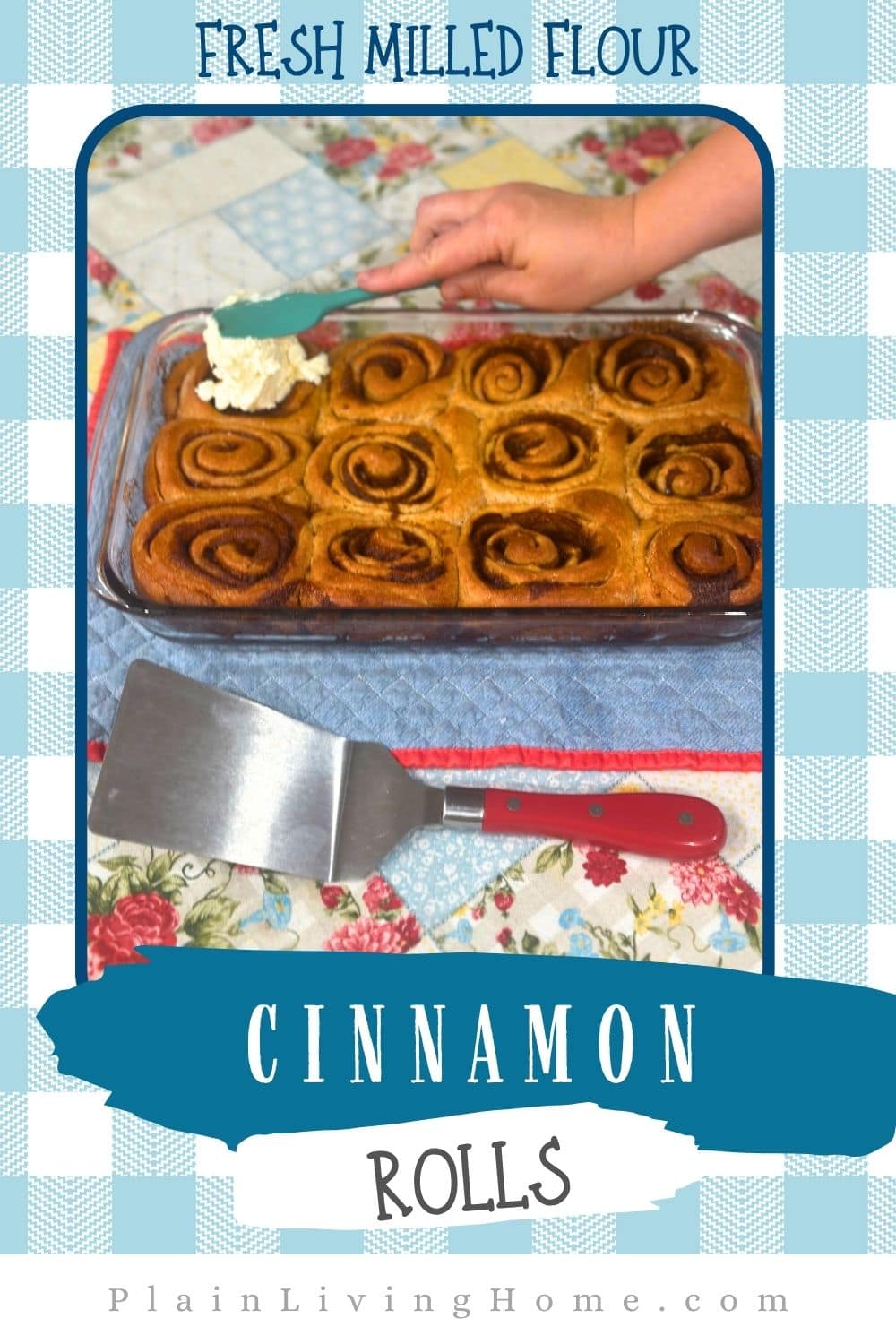
Cinnamon Rolls with Fresh Milled Flour
Equipment
Ingredients
Dough
- 1 1/2 cups milk warmed, use water if desired
- 4 tsp active dry or instant yeast
- 6 Tbs butter softened or melted
- 2 eggs
- 1/4 cup honey
- 1/2 tsp salt
- 4 1/2 cup fresh-milled flour
- 2 Tbs sunflower lecithin only when using soft white wheat
Filling
- 12 Tbs butter softened
- 1 1/2 cup brown sugar
- 3 Tbs ground cinnamon
Buttercream Icing
- 1/2 cup butter softened
- 4 cup powdered sugar sifted
- 1/2 cup heavy cream plus more if needed
- 2 tsp vanilla extract
- pinch salt
Instructions
Dough
- Mill the flour and prepare the ingredients.
- Mill enough grain to produce approximately 4½ cups of flour. Measure the remaining ingredients while the grain is milling.
- You can use fresh-milled hard red wheat, soft white wheat, spelt, or a mixture. When using soft white wheat, add 1–2 tablespoons of sunflower lecithin to help strengthen the dough.
- For a milder flavor that can help beginners introduce fresh-milled flour to their families, use approximately half all-purpose flour and half fresh-milled flour, keeping the total amount at 4½ cups.
- Combine the wet ingredients.
- Pour the warm milk or water into the mixer bowl.
- If using active dry yeast, stir it into the warm liquid and let it bloom for 10–15 minutes. If using instant yeast, you can add it with the flour instead.
- Add the butter, eggs, honey, and salt. Mix briefly to combine.
- Add the flour and let it rest.
- Add the fresh-milled flour and sunflower lecithin, if using. Mix until all the flour is moistened.
- Cover the bowl and let the dough rest for approximately 10 minutes. This gives the freshly milled flour time to absorb the liquid before kneading.
- Knead the dough.
- Using the dough hook, knead the dough until it becomes smoother, elastic, and able to stretch without immediately tearing. This generally takes approximately 15 minutes in my mixer.
- Watch the dough rather than relying only on the timer. It should remain soft and slightly tacky. Avoid adding extra flour too quickly, especially in a dry climate.
- Complete the first rise.
- Cover the bowl with a clean tea towel or reusable bowl cover. Let the dough rise for 45–60 minutes, or until approximately doubled in size.
- The exact time will depend on the temperature of your kitchen.
Filling
- Prepare the filling and shape the rolls.
- Butter a 9 × 13-inch baking dish.
- Roll the dough into a large rectangle approximately ¼ inch thick.
- Mix the softened butter, brown sugar, and cinnamon. Spread the filling evenly over the dough, leaving a small uncovered edge along one long side.
- Beginning with the opposite long side, roll the entire rectangle tightly into one log. Cut the log into 12 equal rolls and arrange them in the prepared baking dish.
- Complete the second rise.
- Cover the baking dish and let the rolls rise for approximately 60 minutes, or until they look light and puffy. The time may vary depending on room temperature.
- Near the end of the rising time, preheat the oven to 375°F.
- Bake.
- Bake the cinnamon rolls at 375°F for approximately 30 minutes, or until the tops are golden and the center rolls are baked through.
- Remove them from the oven and let them cool until warm before adding the buttercream.
Icing
- Make the buttercream icing.
- Beat the softened butter until smooth and fluffy. Gradually mix in the sifted powdered sugar.
- Add the vanilla, salt, and heavy cream. Continue mixing until the icing is smooth. Add a little more cream if needed to reach your preferred consistency.
- Spread or pipe the buttercream over the warm cinnamon rolls and serve.
Video
Notes
* Soft white wheat works in this recipe when 1–2 tablespoons of sunflower lecithin are added for dough strength.
* Spelt produces a soft dough with a mild, slightly nutty flavor.
* A half all-purpose, half fresh-milled blend is a good option for beginners or families adjusting to whole-grain flavor.
* Milk produces a richer dough, but water also works.
* Softened butter is traditional in the dough, but melted butter works when you are short on time.
* Rising time depends on room temperature. Judge the dough by its size and appearance rather than the clock alone.
* This recipe has not been tested as an overnight refrigerated dough or as frozen unbaked rolls. Keywords: fresh milled flour cinnamon rolls, whole grain cinnamon rolls, homemade cinnamon rolls, spelt cinnamon rolls, from-scratch breakfast
Nutrition
Leave a Comment and Share Your Results

Kim is an adventurous mama of 5 who has been building new skills over 16 years of marriage. Over the past decade, she and her family have built a homestead from the ground up, starting with meat and egg chickens, growing into a large garden, and learning to preserve their harvest.
She taught herself to sew, crochet, and knit 13 years ago through books and early YouTube tutorials, and has been making handmade projects ever since.
Cooking from scratch became a necessity and a passion as her family learned to eat more nutritionally and live more frugally. She tests all of her sourdough and fresh milled flour recipes on the kids to ensure they’re delicious and nutritious.
At Plain Living, Kim shares what she’s actually lived — not theory, but the real skills she’s picked up through years of trial, error, and love for her family and home.

These are so delicious and just the right treat with a good cup of Java or Cacao.
Possibly the BEST Cinnamon Rolls ever! They cook up with out drying out and serve beautifully on a plate all fluffy and soft. Add a little icing on the side to dip in just for the fun of it! Sugar high!!!