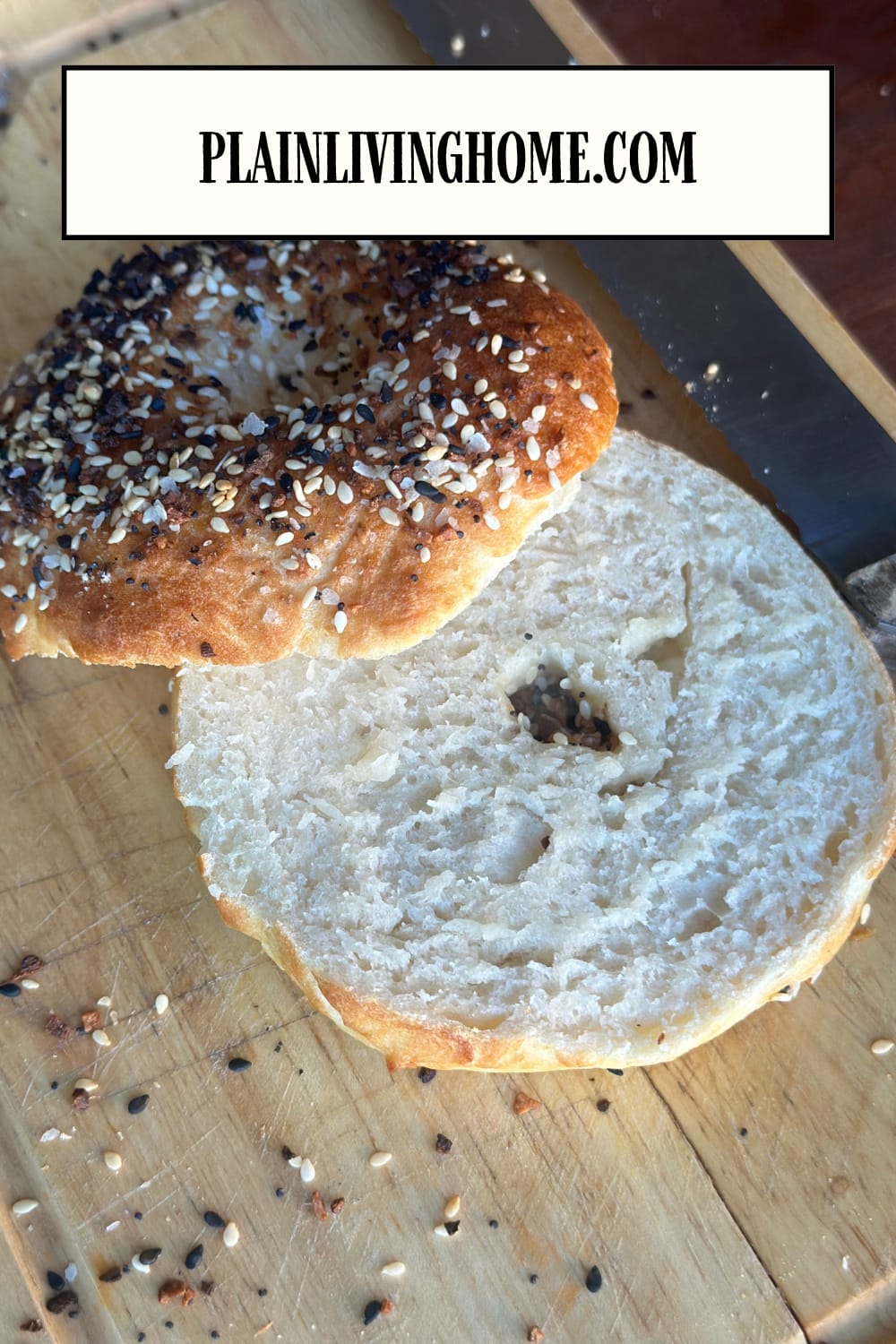
The Best Sourdough Bagels
Classic chewy sourdough bagels made with active starter, boiled for shine and texture, and baked until golden. Soft inside, chewy outside, and perfect for cream cheese, breakfast sandwiches, and freezing for later.
Ingredients
Bagel Dough
- 1/4 cup butter melted and cooled slightly
- 2 tablespoons honey
- 1/2 tablespoon fine salt
- 1/2 cup active sourdough starter bubbly and risen
- 1 1/4 cups room-temperature water
- 2 cups fresh-milled hard red wheat flour
- 2 cups unbleached all-purpose flour
- 2 tablespoons sunflower lecithin optional, for softer crumb
- Ingredients — Water Bath & Topping
- 1 teaspoon baking soda
- 1/4 cup coconut sugar or brown sugar or honey
Toppings and Egg wash
- sesame seeds poppy seeds, coarse salt, everything bagel seasoning, or leave plain
- 1 egg beaten with 1 tablespoon water for egg wash or milk, optional
Instructions
Feed your starter before you want to bake.
- Feed your sourdough starter 4–12 hours before mixing so it rises, looks domed, and smells mildly sweet and tangy. When you stir it, it should look airy with bubbles. This “active” starter helps bagels rise and taste great.
Combine Ingredients
- In a large bowl, whisk together the melted butter, honey, salt, sourdough starter, and water. The liquid should look milky and smooth with no streaks of honey. If butter clumps, it was too hot—keep whisking until it blends in.
- Add the flour (choose either the main formula or the swap) and the lecithin. Stir with a sturdy spoon or mix on low until a shaggy, rough dough forms and you no longer see dry flour. The dough will look lumpy and a little scrappy—this is okay.
Rest the dough (autolyse light).
- Let the dough sit for 10 minutes. This rest helps the flour soak up the water. After resting, the dough will feel less sticky and easier to knead.
- Knead with a stand mixer on low-medium speed for 8–10 minutes, or knead by hand for 12–15 minutes. Bagel dough should feel firm and tight, not soft like sandwich bread. It should look smooth like a balloon and spring back when you press it.
- Check the dough feel.
- Pinch a small piece and stretch it—if it makes a thin, stretchy “window” without tearing right away, you are close. If it tears quickly, knead 1–2 minutes more. The dough should hold its shape in a ball and not slump.
- First rise (bulk fermentation).
- Place the dough in a lightly oiled bowl, cover, and let it rise at room temperature until it looks puffy and has grown by about 50–75%. This may take 3–5 hours, depending on room temperature and starter strength. It will feel lighter when you lift it.
- For deeper sourdough flavor and easier shaping, cover the bowl and refrigerate the dough for 8–12 hours or overnight. Cold dough is firmer, which makes shaping neat bagels simple. You can skip this if you’re short on time.
- Turn the dough onto an unfloured or very lightly floured counter. Cut into 8 equal pieces (use a scale if you have one). Each piece should look like a small puck, about the size of your palm.
- Working with one piece at a time, cup your hand over it and drag in small circles on the counter to create surface tension. The ball should look smooth on top with a sealed bottom seam. Repeat for all pieces. Rest 5 minutes.
- Use your thumb to poke a hole in the center of a dough ball. Slip two fingers in and spin the dough gently to stretch the hole to about 1.5–2 inches wide. The ring should look even all the way around. Repeat with all pieces.
- Place shaped bagels on a parchment-lined baking sheet. Cover loosely and let them proof 45–90 minutes at room temp. They should look slightly puffy and spring back slowly when gently poked. Meanwhile, preheat the oven to 425°F (218°C).
- Fill a wide pot with at least 3 inches of water and bring to a gentle boil. Stir in 1 teaspoon baking soda and 1/4 cup coconut sugar. The water should look lightly colored. Reduce heat to a steady simmer—gentle bubbles, not a hard rolling boil.
- Drop 2–3 bagels into the simmering water. They should float within seconds. Boil 20–30 seconds per side for a softer crust or 40–45 seconds per side for a chewier crust. Use a slotted spoon to flip and remove them; let water drip off.
- Place boiled bagels back on the parchment. Brush with egg wash (or milk) so toppings stick. Sprinkle sesame seeds, poppy seeds, coarse salt, or everything bagel seasoning evenly over the top. Press lightly so seeds grab.
- Bake until golden and glossy.
- Bake at 425°F for 18–22 minutes, rotating the pan halfway through. Bagels are done when they look deep golden, feel firm on the sides, and sound lightly hollow when tapped. The crust should look shiny and the bottoms should be browned.
- Cool bagels on a rack for at least 15 minutes so the crumb sets. Slice and toast for a classic bagel bite. The crumb should look even with small, tight holes and the crust should chew, not crackle.
- Store and freeze.
- Keep at room temperature in a sealed bag for 2–3 days. For longer storage, slice, then freeze in a freezer bag for up to 3 months. Toast straight from frozen for the best texture.
Notes
- The tested main formula uses 280 grams fresh-milled hard red wheat flour and 240 grams unbleached all-purpose flour. Different flours absorb water differently, so substitutions may require small adjustments. Regardless of the flour used, the finished dough should feel firm, elastic and able to hold its shape.
- Lecithin helps whole-grain bagels stay soft and tall without losing chew; it is optional but helpful.
- The baking soda + coconut sugar water bath gives the classic shiny crust and bakery bagel flavor.
- Proofing times vary with room temperature and starter strength; trust the look—bagels should appear slightly puffy before boiling.
- Popular topping: Everything Bagel Seasoning.
Nutrition
Calories: 299kcalCarbohydrates: 54gProtein: 7gFat: 7gSaturated Fat: 4gPolyunsaturated Fat: 1gMonounsaturated Fat: 2gTrans Fat: 0.2gCholesterol: 15mgSodium: 632mgPotassium: 147mgFiber: 4gSugar: 8gVitamin A: 181IUVitamin C: 0.03mgCalcium: 18mgIron: 3mg
Tried this recipe?Let us know how it was!
