How to Knead Dough: A Beginner’s Guide
Some links in this post may be affiliate links. That means I might make a small commission on qualifying purchases if you click the link. There is no extra cost to you.
Kneading dough looks simple, but it changes everything. You align gluten proteins, trap gases, and build structure so your bread bakes tall, springy, and tender. In this guide, I’ll show you how to knead by hand and with a stand mixer, how sourdough fits in, and how to test for perfect gluten development.
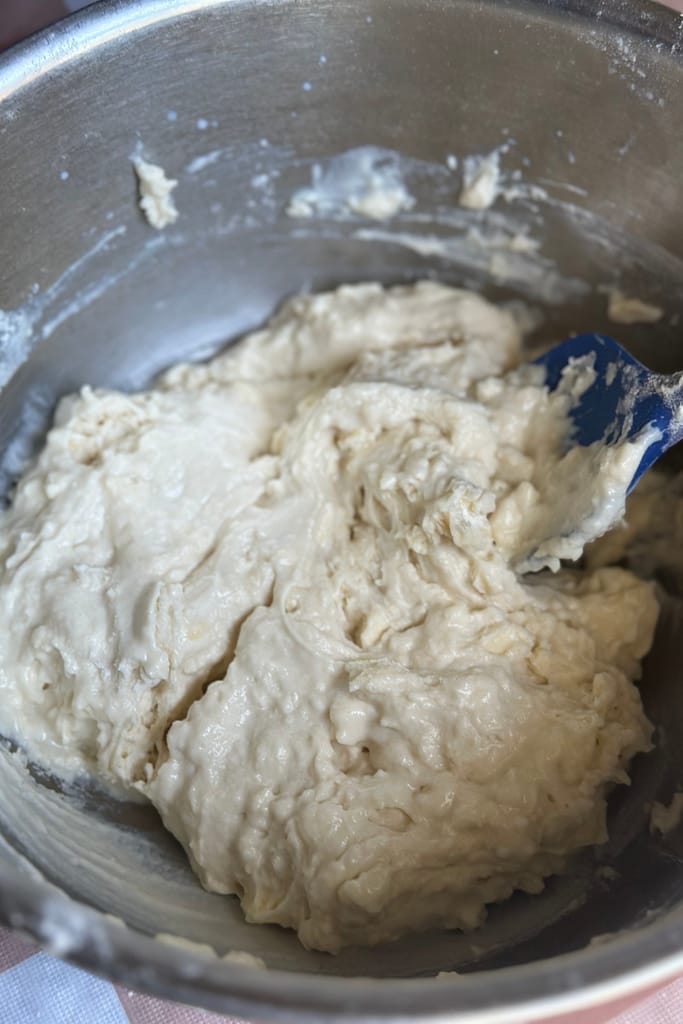
Table of Contents
- Why Kneading Matters (The Science)
- Yeast Dough vs. Sourdough
- How to Knead by Hand
- How to Knead with a Stand Mixer
- Fresh Milled Flour: Longer Knead & Sunflower Lecithin
- The Windowpane Test & Visual Cues
- Troubleshooting & FAQs
Why Kneading Dough Matters (The Science)
Kneading hydrates and aligns glutenin and gliadin so they bond into gluten strands. Those strands create an elastic network that traps CO2 from yeast or sourdough, which lifts and opens your crumb. For visuals and technique, see King Arthur’s kneading and windowpane guides (how to knead; windowpane test). For ingredients and water basics, see our simple primer: How to Boil Water.
Yeast Dough vs. Sourdough
Commercial-yeast dough develops quickly because you mix, knead, and ferment on a tighter schedule. Sourdough needs strength too, but you can build it through kneading or through timed folds during bulk fermentation. King Arthur explains how folds add strength by stretching and stacking the gluten network (bulk fermentation & folds), and Serious Eats shows knead, fold, and shaping options in detail (sourdough handling).
You can absolutely knead sourdough like a yeast dough and then add a few gentle folds. I prefer kneading because it gives consistent strength, then I use 1–2 fold sets to fine-tune structure. For flaky applications like pies, check dough feel carefully when swapping flours: Simple Sourdough Pie Crust.
How to Knead Bread Dough by Hand
Use a light film of oil on the counter to avoid loading in extra flour. Pull the dough toward you, fold it over itself, and push it away with the heels of your hands. Turn the dough 90°, repeat, and keep a quick, steady rhythm. Aim for 8–12 minutes for most wheat doughs; wet doughs may need a bit more (kneading wet dough).
The goal is to stretch the bottom side of the dough that touches the counter. As you fold, push, and turn the dough, the underside will continue to stretch and develop the strands of gluten.
You will find it very hard to over-knead most doughs by hand because your arms tire before the dough breaks down. If the dough smears and tears instead of stretching, cover it for 10 minutes and resume. Rest periods let starch and proteins hydrate, which makes kneading faster and easier.
How to Knead with a Stand Mixer
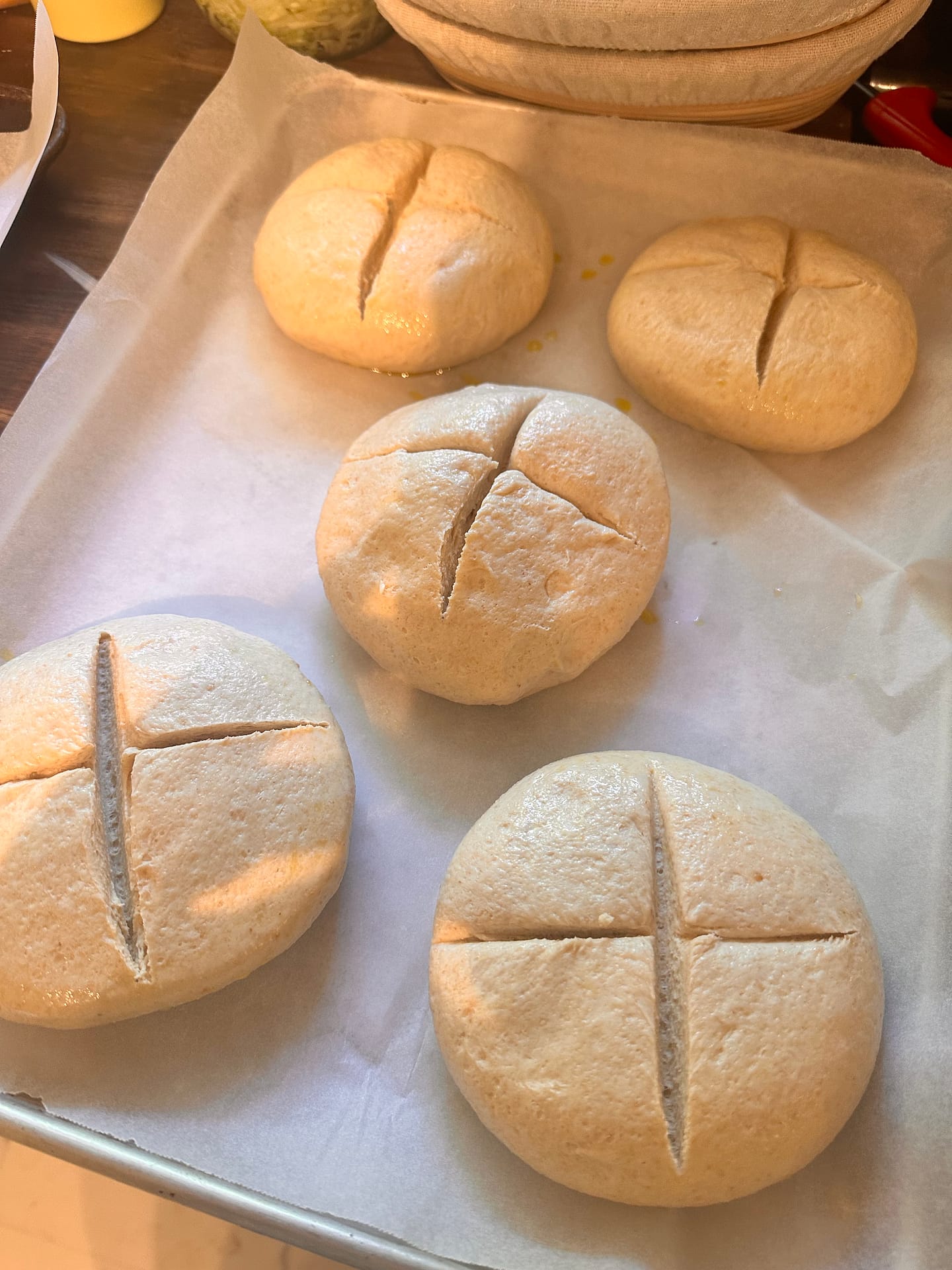
Start with the dough hook on low to medium-low speed. For many sandwich breads, 5–7 minutes builds adequate strength; whole-grain doughs often prefer the low end and a short rest to protect dough temperature (KAB whole wheat: 5–7 minutes). The bowl should be clean from how the dough kneads against it and the dough should look smoother and slightly shiny.
Overkneading can happen in a mixer, but you will see warning signs: the dough climbs the hook, warms up, tears easily, and looks greasy or ropey. Stop and let the dough rest if you notice those signs. Keep speeds conservative; King Arthur’s guides show moderate speeds for better gluten with less heat (example timing).
Fresh Milled Flour: Longer Knead & Sunflower Lecithin
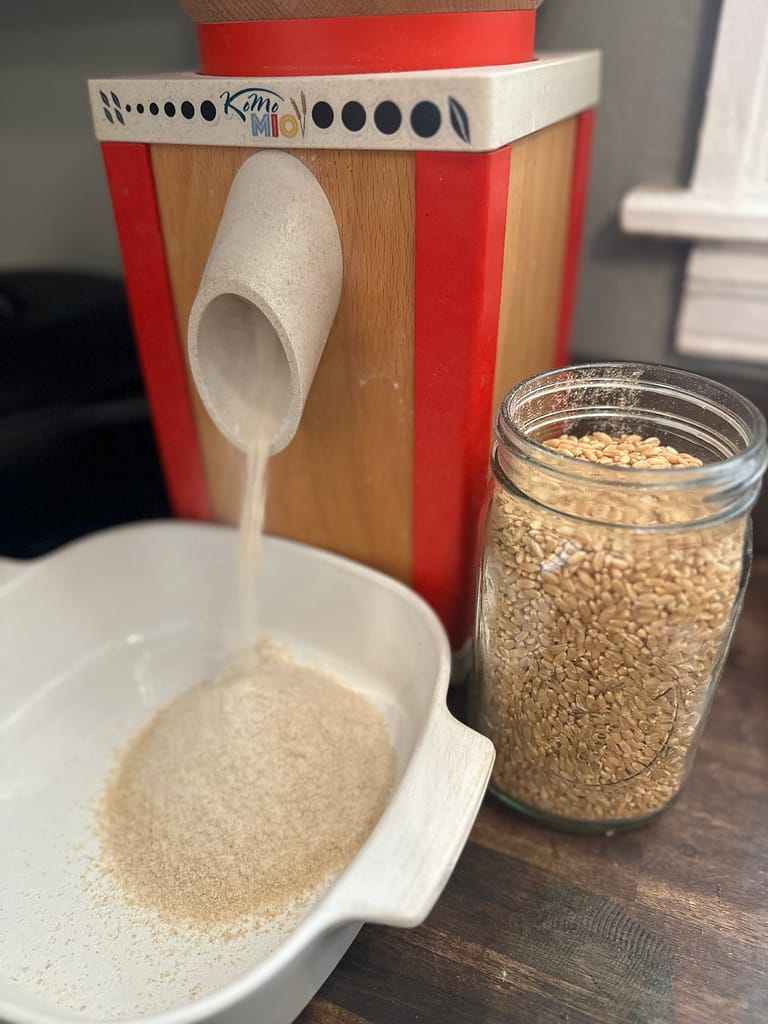
Fresh milled flour includes the bran and germ, which act like tiny blades and can interrupt gluten formation. You’ll often need more mixing time and an extra rest to fully hydrate the bran. Expect at least 10–15 minutes in a stand mixer for many 100% fresh-milled wheat doughs, then check the windowpane and surface sheen (home-milling sources and bakers consistently report longer development with fresh-milled flour: The Perfect Loaf). Learn the “why” and get grain choices here: Fresh Milled Flour: What It Is & Why It Matters.
Sunflower lecithin (non-GMO) can help fresh-milled loaves. Lecithin acts as a natural emulsifier and dough strengthener; it improves gas retention, crumb softness, and shelf life (Bakerpedia overview; emulsifiers in baking). Add about 0.3%–1% lecithin by flour weight (roughly 1–3 teaspoons per 1,000 g flour) and adjust water as needed because lecithin changes dough feel.
The Windowpane Test & Visual Cues
Pinch off a walnut-size piece of dough and gently stretch it. If you can pull it thin enough to let light through without tearing, you pass the windowpane test (what is windowpane; visual guide). Not there yet? Knead two more minutes, rest five, and test again.
If the test feels tricky, watch the dough. Properly kneaded dough looks smoother with a slight glossy sheen and springs back when you poke it. Under-kneaded dough feels rough and tears; over-mixed machine dough looks stringy and warms up fast.
Troubleshooting & Quick Tips
If dough tears during shaping, you likely need more strength—knead a bit longer or add a fold in bulk. If dough feels tight and resists shaping, let it rest to relax the gluten. For sourdough, combine a short initial knead with 2–3 sets of stretch-and-fold to build strength without overheating (why folds work; folding methods). When you switch to home-milled grain, revisit hydration and knead time using our guide: Fresh Milled Flour.
Summary: Kneading builds gluten, which builds bread. Use hand kneading or a mixer, test with a windowpane and sheen, and give fresh-milled flour extra time (plus a touch of sunflower lecithin) for stellar loaves.
Kneading Dough FAQs
Quick answers about hand kneading, stand mixers, sourdough folds, the windowpane test, and fresh milled flour timing.
How long should I knead dough by hand?
Most medium-hydration wheat doughs need 8–12 minutes. Sticky, high-hydration doughs may need more time or a few short rests. Watch the windowpane and surface sheen to decide when to stop (KAB: kneading wet dough).
What are typical stand-mixer kneading times?
Start on low to medium-low; 5–7 minutes builds strength for many sandwich breads (KAB whole wheat timing). Use rests if the dough warms or climbs the hook. Keep speeds conservative to avoid overheating.
Is it easy to overknead bread?
By hand, it’s hard to overknead. In a mixer, overkneading can happen if you run hot and fast—watch for tearing, stickiness, and dough that feels ropey. Use the windowpane and rests to keep gluten strong (windowpane guide).
How do I develop gluten in sourdough without heavy kneading?
Use stretch-and-fold sets during bulk. Each set gently strengthens the dough by stretching and stacking the gluten network (why folds work; folding methods). I often knead briefly, then add 1–2 fold sets for polish.
Why does fresh milled flour take longer to knead?
Bran and germ interrupt gluten alignment and need more hydration time. Plan for 10–15 minutes in a mixer for many 100% fresh-milled doughs and use short rests. Home-milling guides confirm the longer development window (fresh-milling guide).
What does sunflower lecithin do in bread dough?
Lecithin acts as a natural emulsifier and dough conditioner. It improves gas retention, crumb softness, dough handling, and shelf life (Bakerpedia: lecithin; emulsifiers in baking). Start at 0.3%–1% of flour weight.
How do I know when to stop kneading?
Pass a gentle windowpane and look for a smooth, slightly glossy surface. The dough should spring back when poked and feel elastic, not ragged. If it tears, knead a bit more and retest (visual cues).