Free Skyscraper Unit Study for Homeschool | Amazing Architecture Series
Some links in this post may be affiliate links. That means I might make a small commission on qualifying purchases if you click the link. There is no extra cost to you.
Homeschooling has always been one of our favorite ways to learn together as a family. Not just because of the lessons, but because of the moments around the table. Colored pencils scattered everywhere. Little hands tracing letters. Big kids explaining ideas in their own words. That is exactly why I started the Amazing Architecture homeschool unit study series that includes the FREE skyscraper unit study.
I wanted a set of free homeschool printables that all of my children could use at the same time. Something hands‑on, interesting, and flexible enough to work for a large family with many different ages.
Table of Contents
- Why I Created the Amazing Architecture Series
- A Unit Study Designed for the Whole Family
- What Is Included in the Skyscraper Unit Study
- Why Observation and Sketching Matter
- Easy Printing for Homeschool Moms
- Perfect for Large Family Homeschooling
- Part of the Amazing Architecture Series
- Why Architecture Is an Ideal STEM Subject
- How to Use This Unit in Your Homeschool
- Download the Free Skyscraper Unit Study
- More Free Homeschool Printables
Today I’m excited to share the newest resource in that series:
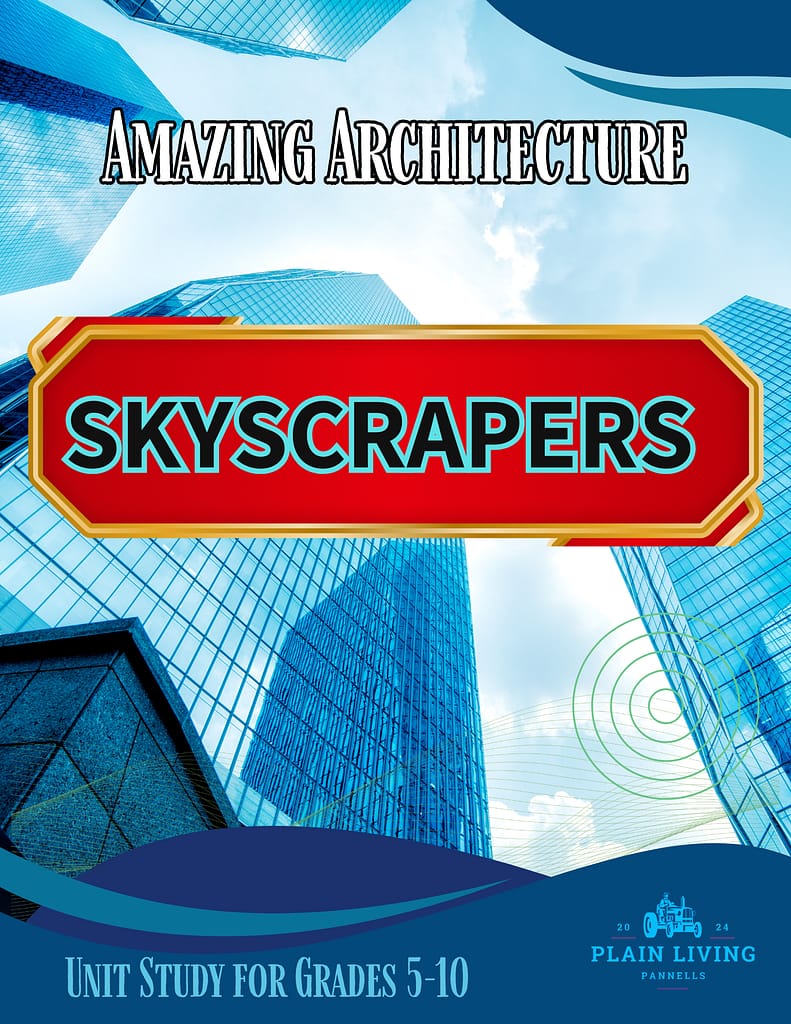
The Free Skyscraper Unit Study – A Complete Architecture Workbook for Grades 5–10. Just type in your email address and I’ll send it over.
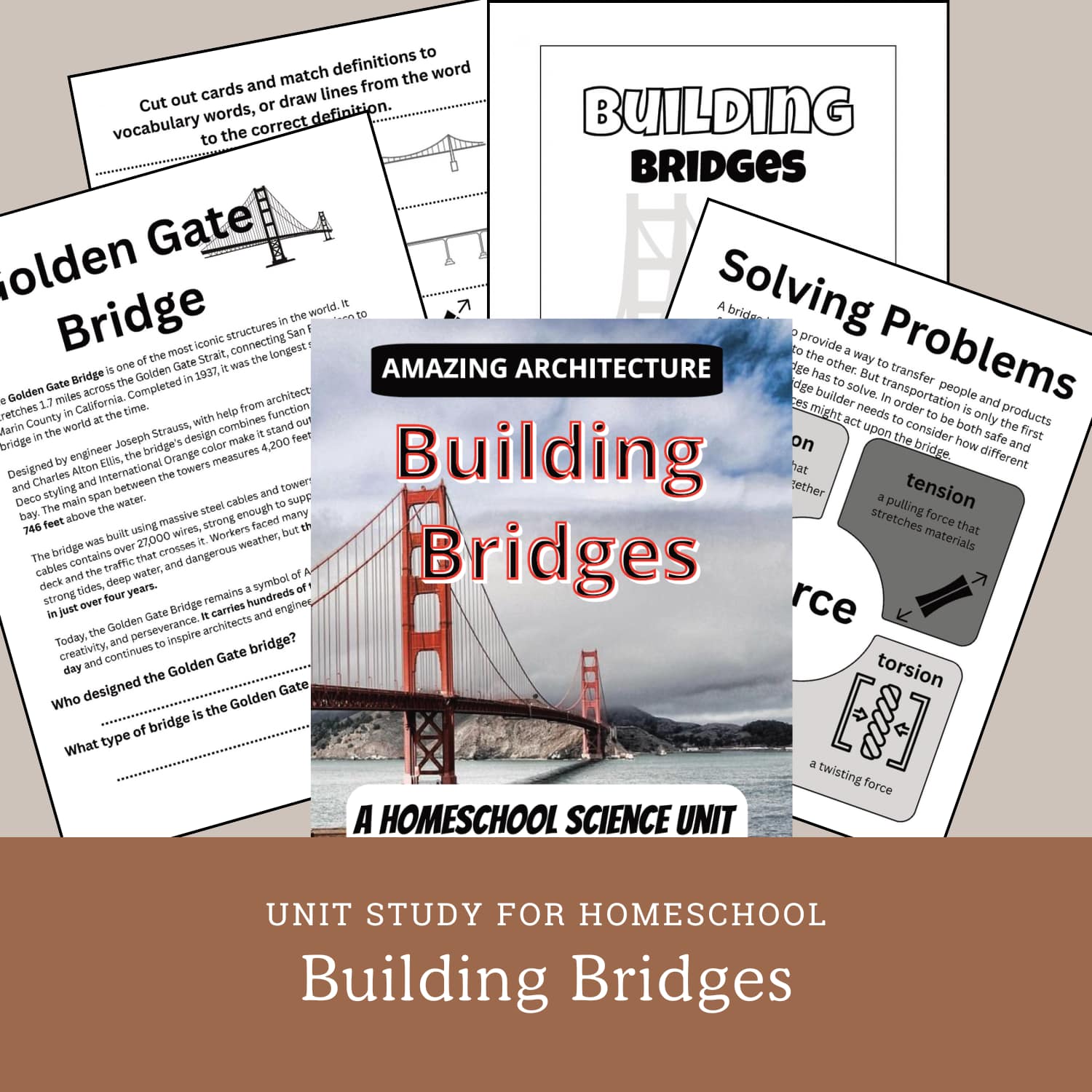
This printable continues the same style you loved in our Bridges unit study and expands the series into tall buildings, engineering history, and architectural design.
If you’re looking for:
- free homeschool unit studies
- STEM printables for multiple ages
- architecture lessons for upper elementary and middle school
- large family homeschool resources
- or science activities your whole family can do together
…this one was created with you in mind.
Why I Created the Amazing Architecture Homeschool Series
Homeschooling in a large family looks very different than homeschooling one child at a time.
We don’t sit at separate desks in separate rooms. We gather around one table.
Some kids are reading and answering questions. Some are underlining key ideas. Some are coloring pictures and sketching buildings.
And some of my youngest boys are just happy to have their own paper and pencils so they can “do school” with everyone else.
That was the heart behind this series.
I wanted unit studies that work for all ages at once. Not babyish for older kids. Not overwhelming for younger ones.
These architecture unit studies let:
- older students read, research, and write
- middle students answer questions and analyze
- younger students color, sketch, and observe
- and toddlers feel included with their own copy
Even if they cannot read yet, they still get to participate. They listen to the lesson. They underline words with help. They color the buildings. They sketch shapes.
And most importantly, they sit with us.
Those moments matter.
A Homeschool Unit Study Designed for the Whole Family
Grab a copy of my free printable unit study
Amazing Architecture: Skyscrapers
Discover the Skyscraper edition of my hands-on homeschool unit studies designed for the whole family.
Join below and I will email you the Skyscrapers workbook. Stay tune for even more science printables created for multi-age learning and large family homeschooling. Sign up now!
One of the biggest challenges in homeschooling multiple ages is finding material that truly works across grade levels.
This skyscraper unit study was written to be:
- flexible for grades 5–10
- adaptable for younger students
- usable in family school time
- simple enough to print at home
Every activity can be adjusted.
A sixth grader might write full paragraph answers. A fourth grader might answer in short sentences. A first grader might circle words and color the pictures.
And that is exactly how we use it in our own homeschool.
I believe strongly in family learning.
Research shows that children who learn in cooperative family environments:
- retain information longer
- develop stronger communication skills
- build closer sibling relationships
- and gain confidence by teaching one another
When siblings explain ideas to each other, real learning happens.
That experience shaped every page of this workbook.
What Is Included in the Free Skyscraper Unit Study
This printable workbook is part of the Amazing Architecture homeschool series. Grab yours by typing your email address here:
It focuses on:
- the history of skyscrapers
- engineering breakthroughs
- architectural styles
- STEM concepts
- observation and sketching
- and vocabulary development
Inside this free unit study you’ll find:
1. Introduction to Skyscrapers
Students learn:
- what defines a skyscraper
- how tall buildings are classified
- the difference between low‑rise, mid‑rise, and high‑rise buildings
This section builds foundational knowledge before moving into history and engineering.
2. Architecture Vocabulary in Context
Instead of memorizing definitions, students read a short essay that naturally uses words like:
- footprint
- massing
- podium
- facade
- fenestration
- atrium
- curtain wall
- cantilever
- exoskeleton
- masonry
- megastructure
This approach helps students:
- understand vocabulary through context
- recognize words in real reading
- prepare for technical writing later
This works beautifully for upper elementary and middle school students.
3. Match‑the‑Word Vocabulary Activity
Students match building types to their definitions.
This reinforces:
- reading comprehension
- classification skills
- technical vocabulary
And it works well for both independent learners and group lessons.
4. Why Skyscrapers Exist
Students explore:
- limited land in cities
- population growth
- vertical building solutions
- advantages of tall structures
This connects architecture to:
- geography
- economics
- urban planning
- and problem‑solving
It’s a wonderful introduction to applied STEM thinking.
5. History of Early Skyscrapers
This section covers:
- Chicago as the birthplace of skyscrapers
- the Great Chicago Fire
- the Home Insurance Building
- steel‑frame construction
- caisson foundations
Students learn how:
- engineering solved soil problems
- materials allowed buildings to grow taller
- cities competed to build higher
This ties history and science together naturally.
6. Skyscraper Review Questions
Two full review pages help students:
- recall facts
- analyze history
- compare building types
- explain engineering concepts
These pages work well as:
- independent assessments
- discussion prompts
- oral narration guides
- or written assignments
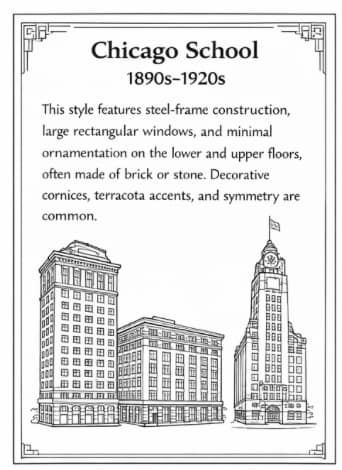
7. Gothic Revival Architecture Study
This is one of my favorite sections in the entire workbook.
Students learn:
- what Gothic Revival architecture is
- key features like pointed arches and spires
- famous Gothic Revival buildings around the world
Then they move into observation.
8. Observation and Sketching Activities
This unit includes multiple pages for sketching and observation.
Students:
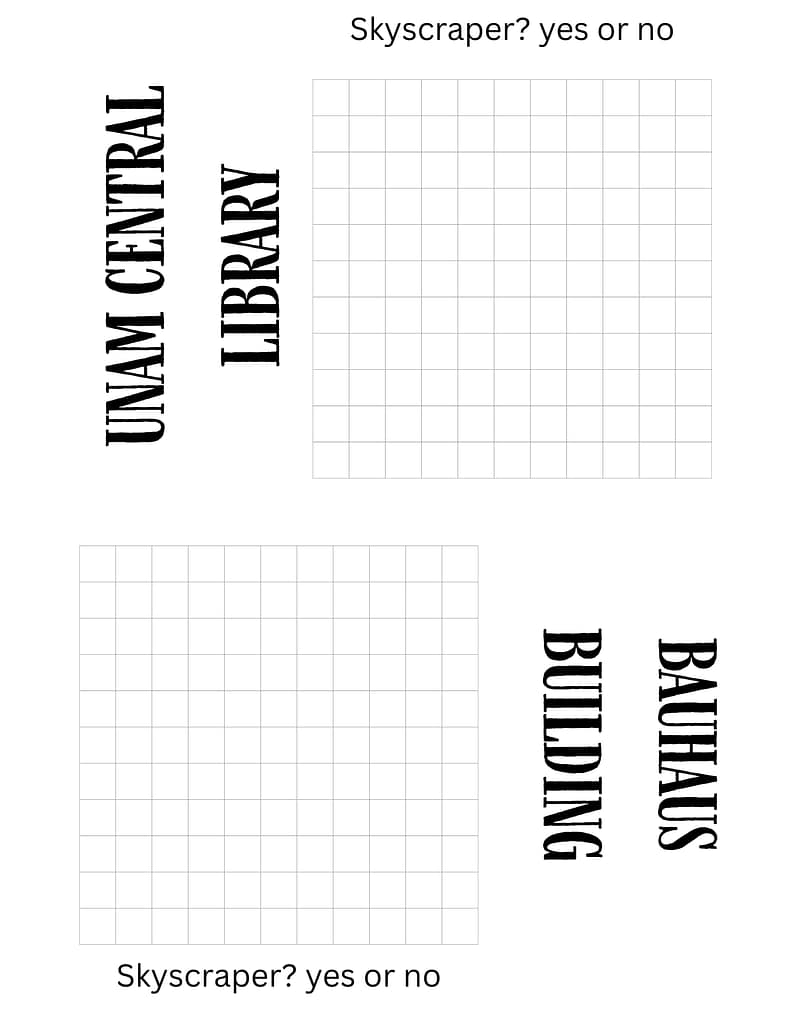
- look up photos of famous buildings
- identify architectural features
- decide whether each building is a skyscraper
- sketch the features they observe
This develops:
- visual analysis skills
- attention to detail
- drawing confidence
- and design thinking
Observation is one of the most important scientific skills a child can learn.
And sketching slows them down enough to really see what they are studying.
Why I Include So Much Observation and Sketching
In our homeschool, I’ve noticed something important.
When children write only answers, they memorize facts.
But when children observe and draw, they understand structure.
Sketching teaches:
- shape recognition
- proportion
- spatial awareness
- patience
- focus
And for younger children, sketching becomes their way of participating before they can write. In addition to sketching, more artistic students can take the time to color their drawings.
My little boys often sit beside the older kids and draw towers. They label parts with help. They color windows. They proudly show their pages.
Those moments are some of my favorite homeschool memories.
Designed for Easy Printing at Home
If you homeschool, you already know how expensive ink can be.
That’s why I design most of my free homeschool printables with:
- low color usage
- mostly black‑and‑white pages
- simple line drawings
- clean layouts
This skyscraper unit study prints beautifully:
- on home printers
- in grayscale
- in binders
- or as individual worksheets
You don’t need special paper or expensive ink.
I believe free homeschool resources should truly be easy to use.
Perfect for Large Family Homeschooling
This workbook works especially well if you homeschool multiple ages.
In our home:
- older kids read aloud
- middle kids answer questions
- younger kids sketch and color
- toddlers copy letters or shapes
Everyone stays at the same table. Everyone hears the same lesson. Everyone feels included.
Large family homeschooling does not have to mean separate lessons for every child.
Unit studies make family learning possible.
Part of the Amazing Architecture Homeschool Series
This skyscraper unit is part of our growing Amazing Architecture series.
So far, the series includes:
Free Bridges Unit Study
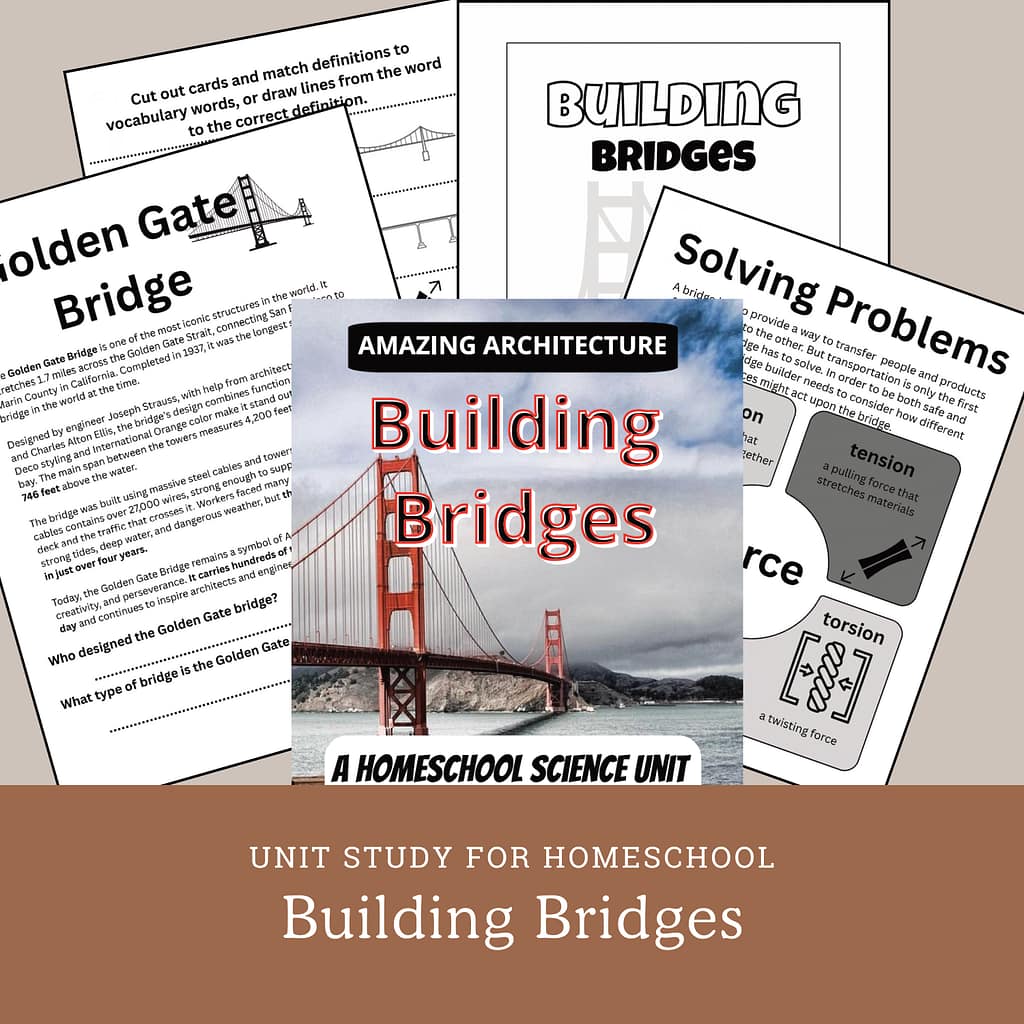
You can download it for FREE from the Plain Living Library.
That unit covers:
- bridge types
- famous bridges
- engineering forces
- design challenges
- observation and sketching
The goal is to build a complete architecture and engineering curriculum that:
- works for homeschool families
- supports STEM learning
- remains accessible and free
Future units will include:
- castles
- stadiums
- towers
- subways
- and more architectural studies
Why Architecture Makes an Excellent Homeschool STEM Subject
Architecture naturally combines:
- science
- technology
- engineering
- math
- history
- art
In one unit, students practice:
- reading comprehension
- technical vocabulary
- historical analysis
- problem solving
- drawing
- observation
- and design thinking
Architecture is also highly engaging.
Children love:
- tall buildings
- famous towers
- record‑breaking heights
- unusual shapes
And those interests open the door to serious learning.
Homeschooling and Family Learning Matter
One of the reasons I am passionate about creating homeschool unit studies is simple.
Time together matters.
Studies consistently show that children who spend meaningful learning time with family:
- develop stronger emotional bonds
- gain confidence in discussion
- build communication skills
- retain information longer
Homeschooling allows:
- shared experiences
- family discussions
- sibling teaching
- and flexible learning
Those benefits shaped the way I designed this series.
These units are not meant to replace textbooks.
They are meant to create moments.
Moments around the table. Moments of discovery. Moments of siblings helping each other.
How to Use This Skyscraper Unit Study in Your Homeschool
Here are a few ways families are already using these architecture printables:
Family Unit Study
- Read the introduction together
- Discuss vocabulary as a group
- Assign different activities by age
Independent Middle School Study
- Students complete reading pages
- Answer review questions
- Research and sketch buildings
STEM Enrichment
- Pair with building projects
- Construct towers with blocks or LEGO
- Design paper skyscrapers
Large Family Morning Basket
- Read one section per day
- Sketch one building each morning
- Review vocabulary together
The flexibility is what makes unit studies powerful.
Download the Free Skyscraper Unit Study
This workbook includes:
- 58 printable pages
- reading lessons
- vocabulary practice
- history
- STEM activities
- observation and sketching
And it is completely free for personal and classroom use.
More Free Homeschool Printables from Plain Living Home
If you enjoy this unit, you may also like:
- Free Bridges Unit Study
- Architecture Worksheets
- STEM Printables for Homeschool
- Science Unit Studies
- Large Family Homeschool Resources
I design all of my homeschool printables to be:
- practical
- affordable
- family‑friendly
- and flexible for many ages
How I Turn Printables Into Real Workbooks
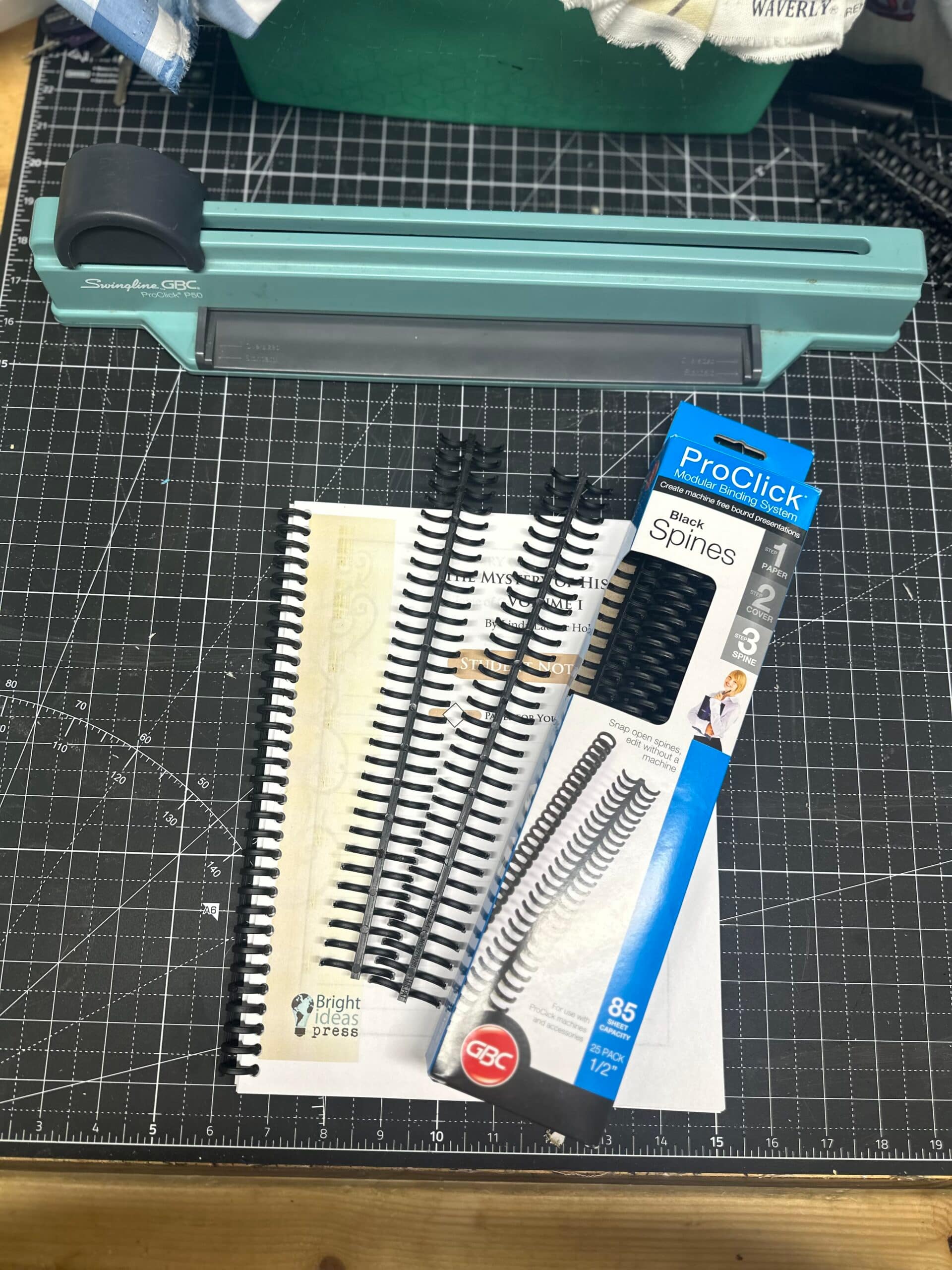
If you’ve ever printed a great freebie or printable curriculum and wished it felt more like a real book, this is the tool I use.
I bind our homeschool printables with the GBC ProClick binding machine, which lets me turn loose pages into spiral-bound workbooks that lay flat and hold up to real use. I’ve used it hundreds of times—for homeschool workbooks, morning work, journals, VBS materials, and more.
You can also bind your printable sewing tutorials and all your favorite Plain Living Recipes, so it really is super versatile!
The ProClick combs are reusable, so I can add or remove pages as we go, and the finished books feel far more durable (and motivating) than binders or stapled packets.
👉 You can read my full review of the GBC ProClick binding machine here
👉 Or check the current price here
Enjoy your homeschool.
This skyscraper unit study represents everything I love about homeschooling.
Learning together. Studying real topics. Including every child. Creating moments instead of just assignments.
If you try this unit in your homeschool, I would love to hear how your family uses it.
And if you are building a large family homeschool, know this:
You are not behind. You are not doing too little. You are building something beautiful around your table.
Happy learning!