Free Paragraph & Essay Writing Printable (Grades 3–8)
Some links in this post may be affiliate links. That means I might make a small commission on qualifying purchases if you click the link. There is no extra cost to you.
If teaching writing makes you feel a little stuck, I am here to help with a free homeschool writing printable. I’ve had this “How to Write a Paragraph and Essay” workbook in my head for a while now, and finally put it on paper. The concept is simple. Once your student knows the basic structure, they can write excellent paragraphs and essays.
A lot of homeschool moms know what they want their kids to do (“write a paragraph… now write an essay”), but the missing piece is the framework—the simple structure that makes writing feel doable instead of overwhelming.
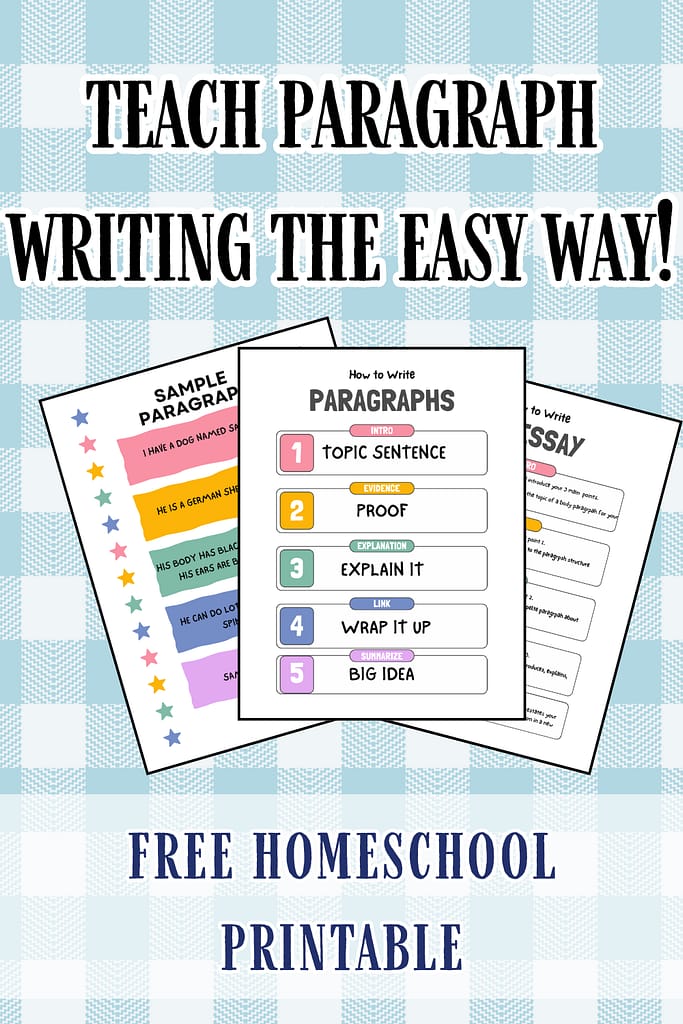
That’s exactly why I made this free homeschool writing printable: it teaches kids how to write a solid paragraph first, then shows them how to use that same structure to write a full 5-paragraph essay.
Free Paragraph & Essay Writing Printable
Teach your child how to write a strong paragraph — then turn it into a full essay using the same simple structure.
Writing feels hard when kids don’t know what to do next.
This free homeschool writing printable teaches a clear paragraph framework first, then shows students how to use that same framework to write a 5-paragraph essay — one sentence at a time.
Perfect for grades 3–8 and designed for real homeschool life. Type your email below and I’ll send it right over.
Table of Contents
- Who this Homeschool Writing printable is for
- What’s included in the free download
- The paragraph framework we teach
- How to teach writing in your homeschool (simple plan)
- How this turns into a 5-paragraph essay
- Printing tips (so it actually gets used)
- FAQ
Who this Homeschool Writing printable is for
This free resource is designed for families like mine with multiple kiddos and only one mama to teach them all. Naturally, I wanted it to work well for everyone so it’s geared toward:
- Grades 3–8 (with easy ways to simplify or level up)
- Kids who “freeze” when they see a blank page
- Homeschool moms who want a simple, repeatable method
- Students who need writing broken into clear steps
- Families who want writing to become a life skill (not a daily battle)
If your child can write a sentence but struggles to organize thoughts, this is a great next step. I designed this workbook to be fun, fill in the blank, brainstorming style work sheets so the writing doesn’t feel like drudgery. Hopefully, at the very end, the student can put it all together in a polished final draft.
What’s included in the free download
This free printable workbook contains 30 pages of instructional guides and worksheets. The booklet walks your student through:
- A clear 5-sentence paragraph structure
- Sample paragraphs (basic + improved)
- A simple “how to improve your paragraph” lesson (varied sentence length, better word choices, more description)
- A step-by-step path to writing a 5-paragraph essay
- Planning pages that help students write one sentence at a time before drafting
This is the kind of scaffold that helps kids feel confident, because they always know what to do next.
Free Paragraph & Essay Writing Printable
Teach your child how to write a strong paragraph — then turn it into a full essay using the same simple structure.
Writing feels hard when kids don’t know what to do next.
This free homeschool writing printable teaches a clear paragraph framework first, then shows students how to use that same framework to write a 5-paragraph essay — one sentence at a time.
Perfect for grades 3–8 and designed for real homeschool life. Type your email below and I’ll send it right over.
The paragraph framework we teach
So many writing struggles happen because students don’t know what a paragraph is supposed to contain. I realize that every paragraph isn’t exactly 5 sentences and every essay is not exactly 5 paragraphs. But keep in mind, this is a base skill to build a foundation. Let’s learn hard rules before we try to break them!
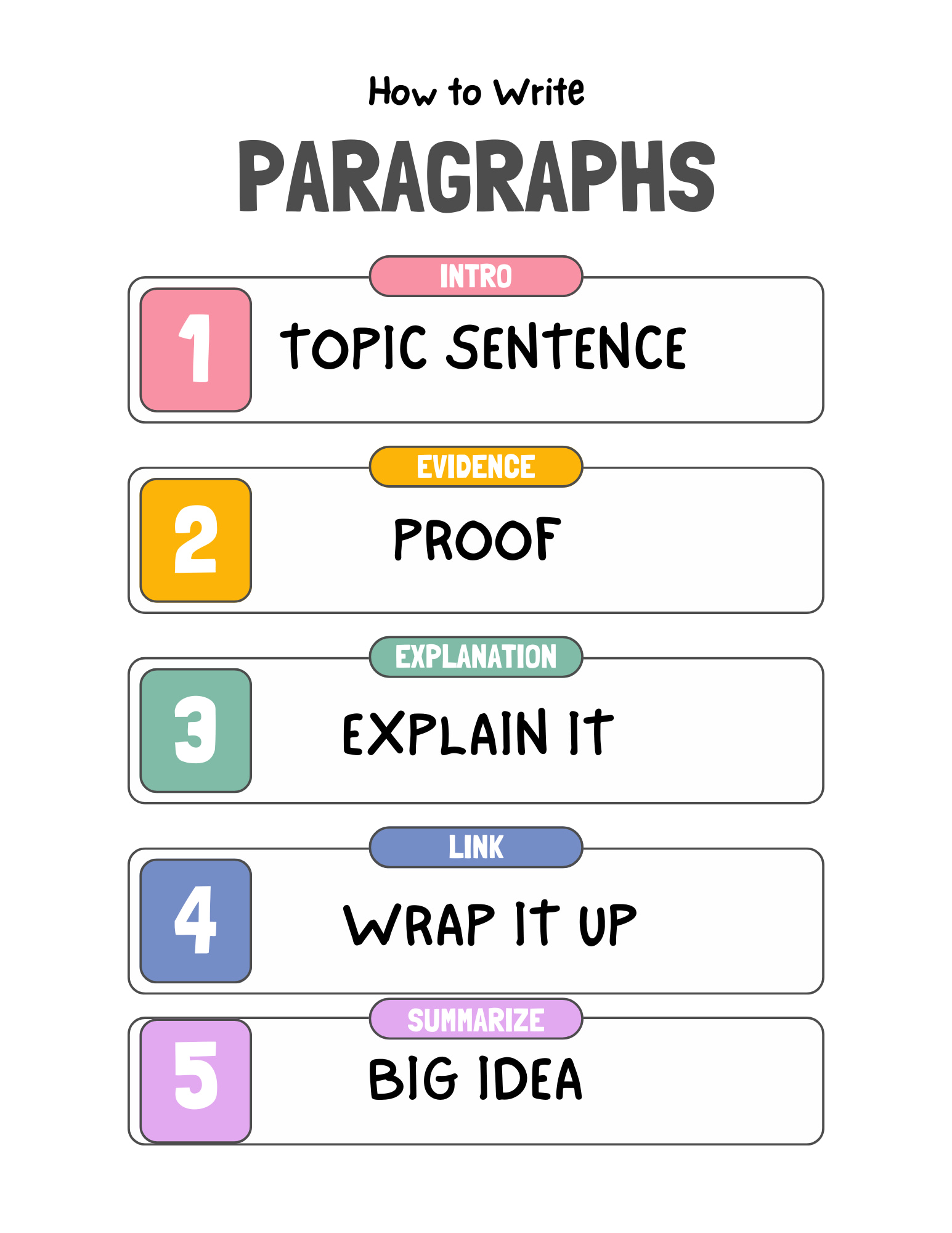
This printable teaches a simple 5-step structure (one sentence per step):
- Topic Sentence (what your paragraph is about)
- Proof (an example, reason, or fact)
- Explain It (how your proof supports your point)
- Wrap It Up (connect back or transition)
- Big Idea (restate your main point in a fresh way)
This structure is similar to well-known paragraph frameworks used in classrooms (point/evidence/explanation/link), but written in homeschool-friendly language and designed to scale into an essay. It can also be slightly varied to look like this:
- Topic
- Point #1
- Point #2
- Point #3
- Summary or transition
How to teach writing in your homeschool
Writing is a pretty simple skill to learn. To be a proficient writer, your student doesn’t necessarily have to write college level essay or new work times best selling novels. The goal is to write a cohesive essay that makes a point, proves the point, and wraps it all up nicely.
That being said, you don’t need a fancy writing curriculum to start seeing progress. In a week, your student can be writing high quality essays without teats. Here’s a low-stress plan that works with real life:
Day 1: Learn the structure
Read the framework page together. Then have your student orally answer:
- “What is your paragraph about?”
- “What’s one proof?”
- “Explain it.”
- “Wrap it up.”
- “Say it again a new way.”
(Oral practice first = fewer tears later.) This is step one for building habits and is very similar to what you may have seen in Charlotte Mason style curriculum. You’re showing the student what to do first, setting an example.
Day 2: Write one paragraph together
Pick a topic your child already likes:
- a pet
- a hobby
- a favorite meal
- a Bible story
- a historical figure
Then, fill in the paragraph planner as a team. It’s okay to lead them a bit on this first try. You’re modeling how to use this framework by giving them clear examples. Once you fill in each section, have your student write the final paragraph accordingly. They just have to copy all 5 sentences into one complete paragraph. Simple!
Day 3: Improve the paragraph
A first draft is never perfect. A revision is a necessary and regular part of the writing process. You dont’ want your student to feel like this is a punishment- it’s just a part of the process of adding on to make their writing great.
With that in mind, I’ve included some helpful ways to improve a paragraph. Guide your student through this section. Ask lots of leasing questions. Use the improvement page to revise:
- add a strong adjective
- replace one “boring” word
- vary a sentence length
- add one comparison (“bigger than,” “better than,” “more than”)
Day 4–5: Repeat on a new topic
Kids learn writing by repetition. Now that you’ve modeled the process, go through it again with less prompting. Let the student fill it out on their own while you watch to make sure they’re understanding. The goal is to make the structure automatic.
Once you think they have a clear understanding of the process, have them do the worksheets a few times on their own. First, they should fill out the worksheet. Then, they can write a rough draft. Next they should revise to improve the paragraph. Finally, they can show you their complete paragraph!
How this turns into a 5-paragraph essay
Here’s the best part about this guide: once a student understands a paragraph, an essay is just five paragraphs built from the same idea:
- Introduction paragraph: introduce the topic + name the three points
- Body paragraph 1: point #1 using the same 5-sentence structure
- Body paragraph 2: point #2 using the same 5-sentence structure
- Body paragraph 3: point #3 using the same 5-sentence structure
- Conclusion paragraph: restate + summarize + end strong
This “same structure, more information” approach is why graphic organizers and planning pages are so effective for student writing—planning reduces overwhelm and makes drafting easier. Follow the same week long process of setting an example, guiding them through, letting them work while your supervise, then letting them work independently.
Printing tips (so it actually gets used)
Free printables only help if they make it off the printer and onto the table. I highly recommend printing multiples of certain pages, or even the whole book. I think you’ll want to use this over and over again in your homeschool.
A few real-life options:
- Print the whole workbook and keep it in a writing binder
- Print only the planner pages and store them in a folder labeled “Writing”
- Slip one page into a sheet protector and use a dry-erase marker
- Print two copies: one for practice + one for “final draft”
How I Turn Printables Into Real Workbooks
If you’ve ever printed a great freebie or printable curriculum and wished it felt more like a real book, this is the tool I use.
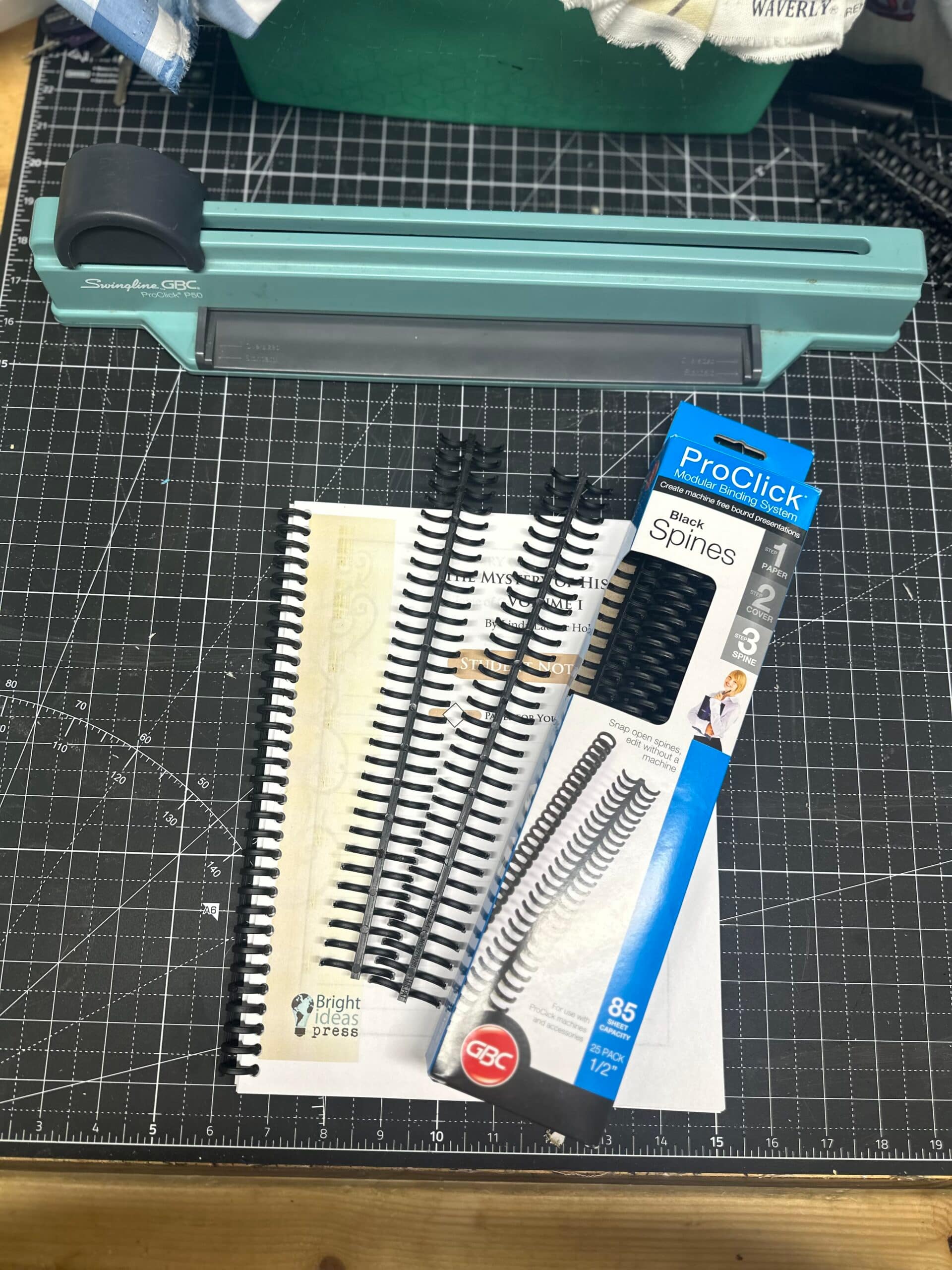
I bind our homeschool printables with the GBC ProClick binding machine, which lets me turn loose pages into spiral-bound workbooks that lay flat and hold up to real use. I’ve used it hundreds of times—for homeschool workbooks, morning work, journals, VBS materials, and more.
You can also bind your printable sewing tutorials and all your favorite Plain Living Recipes, so it really is super versatile!
The ProClick combs are reusable, so I can add or remove pages as we go, and the finished books feel far more durable (and motivating) than binders or stapled packets.
👉 You can read my full review of the GBC ProClick binding machine here
👉 Or check the current price here
If you’re trying to keep homeschool simple (that’s kind of our Plain Living vibe around here), this resource was built to be low prep and repeatable.
Free Paragraph & Essay Writing Printable
Teach your child how to write a strong paragraph — then turn it into a full essay using the same simple structure.
Writing feels hard when kids don’t know what to do next.
This free homeschool writing printable teaches a clear paragraph framework first, then shows students how to use that same framework to write a 5-paragraph essay — one sentence at a time.
Perfect for grades 3–8 and designed for real homeschool life. Type your email below and I’ll send it right over.
Free Homeschool Writing Printable FAQs
Quick answers about this free paragraph & essay writing printable—plus simple ways to use it in your Plain Living Home homeschool.
What grade levels is this free writing printable for?
This free homeschool writing printable works best for grades 3–8. For younger students, you can write their sentences as they dictate (or do one sentence per day). For older students, use the same structure but require stronger evidence, longer explanations, and better word choices.
What does it teach—paragraph writing, essay writing, or both?
Both. It teaches a simple 5-sentence paragraph framework first (topic sentence, proof, explain it, wrap it up, big idea). Then it shows students how to apply that exact same structure to write a 5-paragraph essay—one step at a time step-by-step.
My child hates writing. Will this help reluctant writers?
Yes—because it removes the “blank page” problem. Your student only has to write one sentence per step, which builds confidence quickly. Start with topics they enjoy (pets, hobbies, favorite meals, Bible stories), and keep the first sessions short and encouraging.
How do I use this printable in a simple weekly homeschool routine?
Here’s an easy “Plain Living” plan: Day 1 learn the structure, Day 2 write one paragraph together, Day 3 improve it (better words, more description, varied sentence length), Day 4 write a new paragraph, Day 5 celebrate progress. Consistency matters more than perfection.
Do students really need to write exactly five sentences every time?
For beginners, yes—five sentences makes the structure clear and repeatable. Once your student masters the framework, they can add more proof and explanation (especially in grades 6–8). The goal is strong organization first, then stronger style.
Is this a graphic organizer for paragraph and essay writing?
Yes. It functions like a paragraph writing graphic organizer and a 5-paragraph essay planner, but it also teaches students how to revise and improve their writing. That combination (structure + improvement) is what helps writing “click.”
How should older students (middle school) level this up?
For grades 7–8, keep the same structure but raise expectations: require two pieces of evidence, add specific examples, use stronger transitions, and expand the explanation sentence into two sentences when needed. You can also ask for a hook in the introduction and a more thoughtful conclusion.
Can I print this once and reuse it?
Absolutely. Slip the planning pages into sheet protectors and write with a dry-erase marker, or print a small stack and keep it in a “Writing” binder. This printable is designed to be used again and again across different subjects (history, science, literature, Bible).
What topics should my child write about first?
Start with something familiar: a pet, a favorite book, a hobby, a simple homeschool routine, or a character trait. Familiar topics reduce stress so your child can focus on structure. After that, use it for content-area writing like biographies, nature study, and history summaries.
Is this really free, and do I need to sign up for anything?
Yes—this is a free homeschool printable. Depending on how you share it on Plain Living Home, you may offer it as a direct download or deliver it through email (so readers can find it again later). Either way, the goal is to make writing simpler for your homeschool.