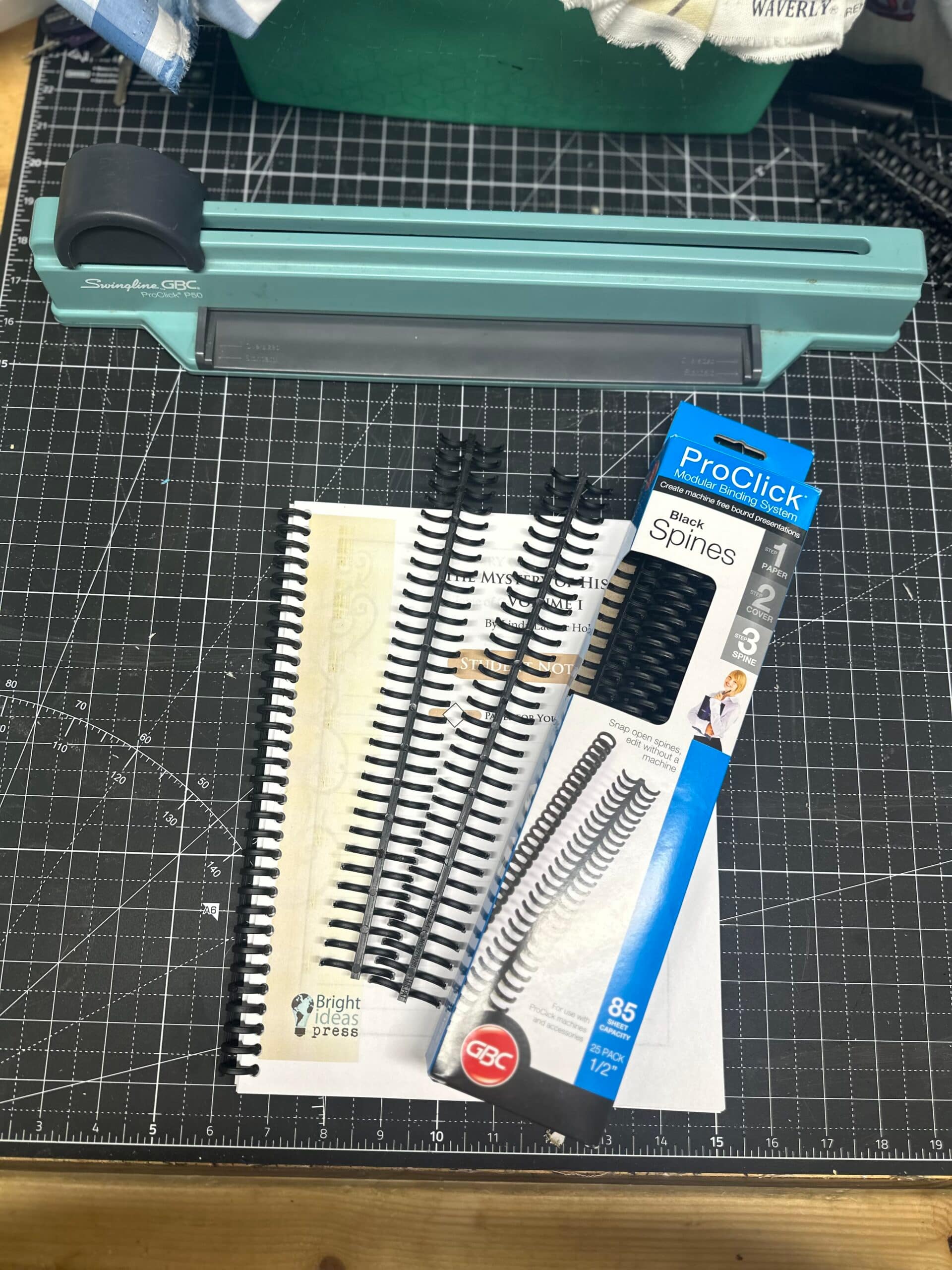
Church Quiet Book for Preschoolers (Free Printable)
Some links in this post may be affiliate links. That means I might make a small commission on qualifying purchases if you click the link. There is no extra cost to you.
If you’ve ever tried to sit through a church service with a preschooler, you already know the challenge. Little hands need something new to do long before the sermon is finished. That is why I created a church quiet book for my littles. I desperately needed to give my young children something calm and purposeful to do — without turning church into a playground.
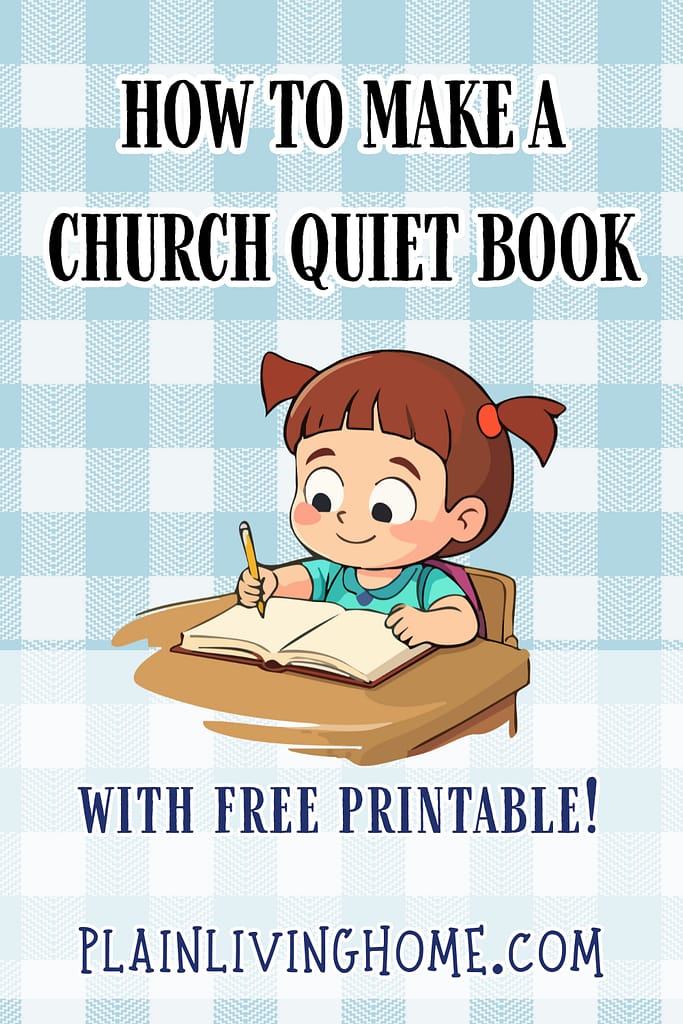
Table of Contents
- What Is a Church Quiet Book
- What My Free Quiet Book Printable Includes
- Why It Works
- Neuroplasticity: Your Child’s Brain
- The Importance of Movement for Kids’ Brains
- Quiet Work Helps Retain What They Hear
- How to Use a Quiet Book
- Why Quiet Activities Help Young Children Listen in Church
- What Makes a Good Church Quiet Book for Preschoolers
- Other Ways to Use This Church Quiet Book Printable
- How to Use This Printable With Different Ages
- Tips for Creating a Peaceful Church Routine With Young Children
What Is a Church Quiet Book
If you have attended a church service with a toddler in tow, you know as well as I do that it can be tricky. Short attention spans are hard to tame! There are different stages and ages for this type of thing. Babies need frequent trips to the nursery for various reasons. Then they become toddlers, which means potty breaks, snack breaks, and hopefully Mama doesn’t break! Get it? I’m being funny. LAUGH!
Every kid is different. Or, at least each of my 5 has been. I’ve tried a lot of different ways to get my kids to sit through a church service. Some of them were easily trained to just sit still and be quiet. Some of them have quietly played with toys. Others need something to do.
A church service can be difficult for a toddler or even a preschooler to navigate. Honestly, sometimes it’s difficult for my own self. First you get to talk to everyone. Then you get to stand up and sing. All of a sudden, and shockingly, you have to sit and be quiet for 40 minutes.
That’s why I started making quiet books. Grown ups get to flip through their Bible and take notes to keep their mind and attention on the sermon. But kiddos aren’t quite there yet. However, most children can be enticed to mimic a grown up behavior for some kind of reward.
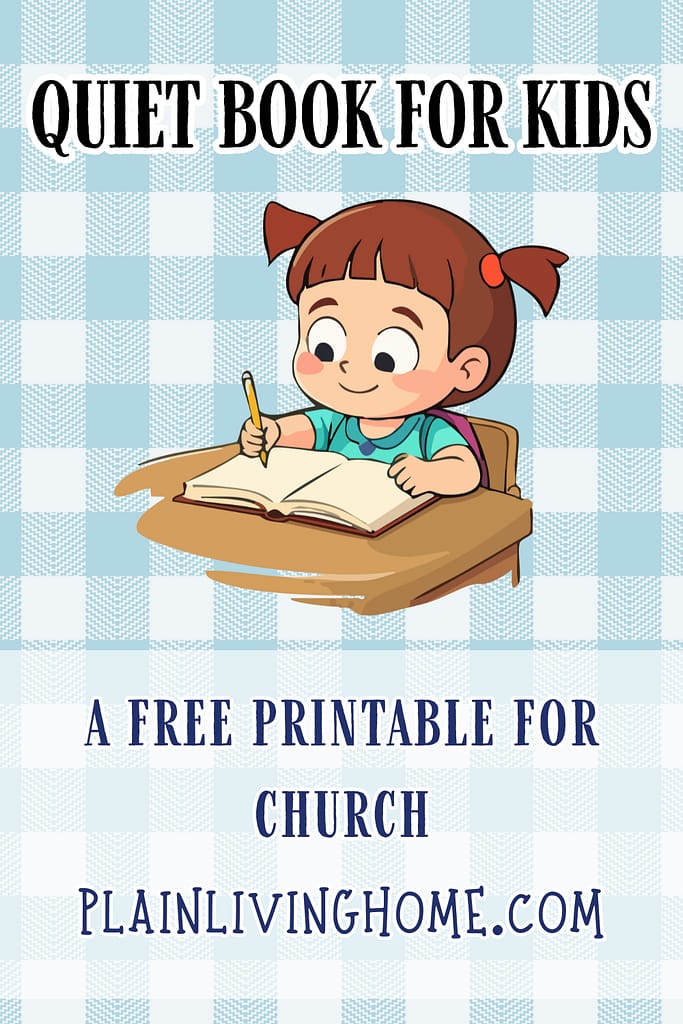
This printable church quiet book is designed specifically for preschool-aged children. Every page focuses on quiet hands, simple movements, and church-related themes so children can stay engaged while learning how to sit and listen. Plus, it builds their motor skills.
What My Free Quiet Book Printable Includes
- I Spy church pages
- Tracing and fine motor activities
- Matching and pattern pages
- Simple mazes with church themes
- Coloring pages tied to worship and creation
- Gentle connect-the-dots pages
Get the free printable quiet book right in your inbox!
Why It Works
This isn’t about keeping kids “busy.” It’s about giving them age-appropriate tools so they can participate in church in a way that fits their development. Have you heard of the science of neuroplasticity? Let’s do a quick crash course.

Neuroplasticity: Your Child’s Brain
Young children are not passive listeners. Even when they cannot explain what they hear, their brains are actively wiring themselves based on the sounds, rhythms, and patterns around them. All of those stimuli cause the brain to make connections, build pathways. The brain is incredible- it builds an intricate road map of everything that’s put into. That roadmap is what allows learning, memory recall, and more.
This ability is called neuroplasticity — the brain’s remarkable capacity to grow, adapt, and form new connections, especially in the early years of life. During preschool age, the brain is constantly building pathways, even when a child does not yet have the language to describe what they are learning.
Nueroplasticity is why children can absorb and retain information long before they fully understand it. A preschooler may not grasp the meaning of a sermon, but their brain is still recording tone, repetition, vocabulary, and structure. Children can even memorize scripture just by hearing it as background noise.
Repetition and Familiarity Build the Brain
Words like Bible, Jesus, pray, and church become familiar long before they become meaningful. Over time, these repeated exposures create mental frameworks that later understanding naturally settles into. Learning does not begin at comprehension — it begins at exposure.
But the secret to building this brain pathways is to simultaneously participate in some kind of activity. When the brain has to take in more than one thing at a time, those things are forever connected by the new pathways being formed. It’s why scents are so strongly tied to memory, and how memories can be triggered by something unrelated.
The Importance of Movement for Kids’ Brains
Movement plays a powerful role in this process. When children use their hands — coloring, tracing, matching, or drawing — they are engaging multiple areas of the brain at once. The information they hear will build connections in the brain, which makes it easier to recall later.
Motor activity strengthens attention, regulates emotions, and improves memory retention by making those brain connections. In simple terms, busy hands help calm the body so the brain can listen. This is why quiet, purposeful activity does not distract young children from learning — it actually supports it.
Quiet Work Helps Retain What They Hear
Allowing a child to color or work quietly during church does not mean they are “not paying attention.” It means their brain is being supported in the way it learns best at that stage of development. Over time, those early experiences form a foundation. Years of sitting, listening, hearing Scripture, and observing worship build neural pathways in the brain.
All of those pathways will eventually make focused listening easier as the child grows. What begins as coloring during a sermon often becomes note-taking years later — because the foundation was laid early, gently, and without pressure. This concept is one of the key factors in how I homeschool.
Neuroplasticity- this idea of building connections and pathways in the brain, is the heart behind using a church quiet book for preschoolers. It is not about entertainment or distraction. It is about honoring how young brains are designed to grow — through exposure, repetition, movement, and calm participation — even before full understanding arrives.
How to Use a Quiet Book
Even though I designed this printable with a specific use in mind, there are no rules. You use the resource however it best fits you and your kids. However, here are some of my thoughts as I make this printable:
- Print and spiral bind (read more about my favorite binding machine)
- Print and place in a binder or clipboard
- Use one page per service
- Crayons, pencils, or dot markers all work
- Pages do not need to be completed to be successful
Why Quiet Activities Help Young Children Listen in Church
Young children are still learning how to regulate their bodies, attention, and emotions. Sitting still and listening for extended periods is a skill that develops gradually — not something children automatically know how to do.
We’ve learned through the process of deputation that every church has different expectations. Some churches hide all of the kids away in the nursery. Contrarily, other churches allow the children to walk, talk, and generally be disruptive. I believe in a more neutral ground that brings balance.
I love to see all the babies and children in church service. But I also want to hear the sermon and be able to pay attention. There’s a good balance here that places equal importance on the children versus the adults.
Quiet activities give preschoolers a developmentally appropriate way to participate in church while their brains mature. When children are allowed to engage their hands in calm, repetitive work, their bodies remain regulated, which allows their ears and minds to stay open to what’s happening around them.
Listening Is a Skill That Is Learned Over Time
Listening in church is not an all-or-nothing behavior. In fact, it’s even difficult for a lot of adults. Some days, I feel likes I can’t pay attention for the life of me. That’s why we have to practice. But we don’t practice in a vacuum, where sitting still is the singular things happening.
We have to coax, lead, and sometimes bribe (ourselves and our children) to see progress with a skill like listening. Also, sitting still. Both listening and being still develop in stages:
- First, children learn to sit. For toddlers, it might last about 3 seconds before they’re up climbing, walking around, taking, or generally being rambunctious. That’s just their attention span.
- Then, they learn to stay seated. Eventually, all of your repeated instructions begin to sink in. But even a toddler sitting still needs to move, or just do something.
- Over time, they begin to recognize familiar words, songs, and rhythms. They’ll know to stand and sing. Then they’ll shake hands. And they’ll understand to sit and be quiet during preaching. But, they might still need some help with the being still part.
- Eventually, they are able to listen with understanding. That’s when you want the habit of sitting and writing to be previously established. When your child reaches an age where he can take notes, you want him to be trained to do so. That’s why we start early to build this habit.
A quiet book supports those early stages without overwhelming the child. It begins a lifelong habit of taking a book or journal to church and writing in it during preaching. It teaches them the atmosphere of a service- both serious and fun.
Quiet Does Not Mean Passive
Children who are coloring, tracing, or matching during church are not disengaged. They are practicing calm focus — a foundational skill for future learning, worship, and self-control.
What Makes a Good Church Quiet Book for Preschoolers
Not all activity books work well in church settings. Loud games, complicated puzzles, or highly stimulating pages often do the opposite of what parents intend. I see this type of busy book/quiet book all over the internet. But honestly, the pieces, the sounds, and the frustration aren’t what I’m looking for.
A good church quiet book is intentionally simple. So, I made these pages easy to understand. Each page has basic instructions — even if your child can’t read, you can whisper a quick directive. They’ll understand the page quickly and easily.
First, I created several types of activities. Then, I made multiple versions of each activity. And finally, I grouped the similar activities together so the child can easily understand instructions, but also flip through for something new to try.
Characteristics of an Effective Church Quiet Book
- Minimal instructions
- Repetitive activity styles
- Church-related imagery
- No requirement to “finish” a page
- Flexible for different ages and abilities
This printable was designed with those principles in mind so parents don’t have to constantly redirect or explain.
Why Simplicity Matters for Preschool Brains
Preschoolers thrive on familiarity. When children recognize the type of activity, they can focus on doing instead of figuring out what to do. This reduces frustration and helps them remain calm throughout the service.
I also made the pages with variation in mind. For example, the child can use crayons, colored pencils, a #2 pencil, and dot markers throughout the book. It gives some variety. And what toddler doesn’t love digging through a pencil bag of art supplies to pick the perfect utensil?!
grab this free printable
Church Quiet Workbook
This quiet church workbook was designed to be flexible. You can use it a little or a lot, one page at a time or as a complete book. Choose the pages you want to print, and take it wherever you need your child to sit quietly. Get yours by typing your email address below.
Other Ways to Use This Church Quiet Book Printable
One of the benefits of printable quiet books is flexibility. This resource is not limited to Sunday morning church services. You can print it out and use it however you want!
Sunday School and Church Classes
Sometimes you need a last-minute Sunday school idea. And sometimes you have substitute teachers who need an easy task. Teachers and helpers can:
- Easily print individual pages or entire booklets for lesson time
- Use I Spy or tracing pages during review
- Offer pages as quiet work while waiting for parents
- Create quiet books for little ones who sit in main service
Homeschool Morning Time or Bible Time
Homeschool mamas are always looking for morning work — for when you just need 10 minutes to finish your coffee and get your thoughts together. This quiet book is something you can print out and keep nearby. Your littles can grab it and use it freely when you’re not available.
Many families, including mine, use church-themed quiet books during:
- Morning devotions
- Bible reading time
- Hymn singing
- Prayer practice
The familiar pages help young children associate quiet work with spiritual rhythms.
Road Trips and Appointments
We have spent a lot of time on the road. We have lived full time in a camper for four years altogether. And those years were spent on deputation, which means lots of traveling. But even if you’re not on the road a lot, there are lots of ways you might use this book.
Because this book requires minimal explanation, it also works well for:
- Long car rides
- Doctor waiting rooms
- Meetings
- Visiting relatives
- Weddings or funerals
A Screen-Free Option Parents Can Feel Good About
In our technological world, kids are always on screens. We are an active, outdoors kind of family. But South Dakota winters and busy travel schedules mean lots of time to occupy. These pages offer purposeful, calm engagement without relying on screens — something many parents actively search for.
How to Use This Printable With Different Ages
This church quiet book was designed for preschoolers in general, but it can easily be adapted for a range of developmental stages. My kids are specifically 5 and 7 years old and enjoy this book. However, we have toddlers at church that also enjoy the book — they just use it a bit differently.
For Younger Toddlers (Ages 2–3)
- Focus on coloring and scribbling
- Allow free exploration of pages
- Skip instructions entirely
For Preschoolers (Ages 3–5)
- Encourage tracing and matching
- Talk quietly about the pictures
- Point out familiar church objects
- Color more in the lines
Letting Children Lead Increases Success
Children do not need to complete pages correctly to benefit. Allowing them to choose which page to work on increases engagement and reduces resistance.
Tips for Creating a Peaceful Church Routine With Young Children
A quiet book works best as part of a larger rhythm, not a one-time solution. Build a habit. Use repetition.
Prepare Before the Service
- Bring the same spiral-bound book, binder, or clipboard each week
- Pack crayons or pencils ahead of time
- Set expectations calmly, without pressure
Consistency Builds Confidence
When children know what to expect, anxiety decreases. Over time, the routine itself becomes calming.
Quiet Participation Is Still Participation
Children who are learning to sit, listen, and observe worship are participating at a level appropriate for their age. These early experiences shape how they view church for years to come.
Frequently Asked Questions
What is a church quiet book?
A church quiet book is a set of calm, screen-free activity pages designed to help young children stay seated and engaged during church. The goal isn’t to “keep kids busy.” It’s to support quiet hands and a listening posture while they learn what it means to participate in worship.
What age is this church quiet book best for?
This printable was made with preschoolers in mind (roughly ages 3–5).
Toddlers can still use it for simple coloring and scribbling, and some early elementary kids enjoy the I Spy pages, mazes, and connect-the-dots—especially if you print it as their “special church book.”
Will this distract my child from the sermon?
Not necessarily. For many kids, quiet motor work actually helps them regulate their bodies so they can listen longer. Think of it like this: busy hands can help calm the wiggles.
Even if they can’t explain the message yet, children are still absorbing vocabulary, tone, Scripture references, and the rhythm of worship. Repeated exposure while using motor skills builds familiarity over time. So, actually, writing in a quiet book will help!
How many pages should my child do during one service?
One page per service is usually plenty.
If your child is younger (or extra tired), half a page might be the win for the day. However, my kids tend to do around 5 pages per service.
What supplies work best for church?
Keep it simple and quiet:
- Crayons
- Colored pencils
- A regular #2 pencil
- Dot markers (bingo daubers) for quick, low-mess fun
A clipboard or binder helps keep pages steady on a pew, or spiral bind the workbook so it sits on their lap neatly. I specifically designed this file to be oriented horizontally. If you bind on the long edge, the spiral comb will be at the top instead of on the one side, where it’s hard to write.
What’s the best way to print and assemble the quiet book?
You can print a single page at a time, or print the full pack and assemble it like a real workbook.
Most families use one of these options:
- Binder + sheet protectors (great for reusing with dry erase markers)
- Clipboard (quick and simple)
- Spiral binding (lays flat and feels like a “real book”) See my recommendation below
Can I use this for Sunday school or children’s church?
Yes—this works beautifully for transition time and “in-between” moments.
Teachers often use quiet pages while waiting for parents, during review time, or for children who sit in the main service. It’s also a helpful backup plan for substitute teachers.
Can I use this for homeschool Bible time or morning devotions?
Absolutely. This quiet book is a great companion for:
- Morning devotions
- Bible reading
- Hymn singing
- Prayer time
It gives younger siblings something meaningful to do while older kids listen and participate.
What if my toddler can’t follow the directions?
That’s completely okay. Toddlers can use these pages for coloring, scribbling, pointing to pictures, or simply flipping through.
You’re building the habit of “this is our quiet church book,” and that habit is the win—even if the page is mostly scribbles.
Can I print more than one copy for my family?
Yes—print as many copies as you need for your household. Many parents find it goes more smoothly when each child has their own pages (and their own pencil bag), especially if you have multiple little ones.
How I Turn Printables Into Real Workbooks
If you’ve ever printed a great freebie or printable curriculum and wished it felt more like a real book, this is the tool I use.
I bind our homeschool printables with the GBC ProClick binding machine, which lets me turn loose pages into spiral-bound workbooks that lay flat and hold up to real use. I’ve used it hundreds of times—for homeschool workbooks, morning work, journals, VBS materials, and more.
You can also bind your printable sewing tutorials and all your favorite Plain Living Recipes, so it really is super versatile!
The ProClick combs are reusable, so I can add or remove pages as we go, and the finished books feel far more durable (and motivating) than binders or stapled packets.
👉 You can read my full review of the GBC ProClick binding machine here
👉 Or check the current price here